
You’ll get a hands-on look at the InMotion RS Jet, a 72V mini monster that delivers blistering acceleration and high-end specs for under $2,500. This piece outlines speed and range tests, acceleration figures, braking and handling observations, and practical riding notes to help you decide if this scooter matches your commute or weekend thrills.
Expect detailed speed runs (0–30 in about 3.5 seconds and a claimed top speed near 50 mph), range checks (claimed up to 56 miles), and evaluations of dual motors, hydraulic disc brakes, 11-inch tubeless tires, touchscreen controls, and IPX6 water resistance. You’ll also find recommended accessories and checkout codes like RIDERGUIDE and RG10 to save on gear, plus a concise buying verdict to wrap things up.

Overview and key specifications
Brief description of the InMotion RS Jet and its positioning in the market
You’re looking at a performance-focused, affordable electric scooter that’s positioned to give riders high-end straight-line performance without the six-figure price tag. The InMotion RS Jet is built and marketed as a “mini monster” — a compact but powerful dual-motor scooter aimed at riders who want aggressive acceleration and high top speed for commuting and spirited urban riding. InMotion is emphasizing value: premium features (touchscreen, hydraulic brakes, tubeless tires, IPX6 rating) at a street price that undercuts many established high-performance scooters.
Claim: fastest acceleration tested under $2500 and what that means
The headline claim — “fastest acceleration we’ve tested under $2500” — comes from Electric Scooter Guide’s hands-on testing and promotional materials. That claim means that, among scooters available at or below roughly the $2,500 threshold in their tests, the RS Jet delivered the quickest 0–30 mph (0–48 km/h) times. For you, this translates into exceptionally quick getaways from traffic lights and the ability to merge into faster city traffic more confidently than most budget-friendly alternatives.
Core electrical specs: 72V battery, 25Ah capacity, dual motor architecture
Electrically, the RS Jet comes with a 72V battery pack rated at 25Ah and a dual-motor architecture. The 72V nominal system voltage and relatively large 25Ah capacity give the platform the headroom for both strong peak power bursts and respectable range when you ride efficiently. The dual motors provide torque to both wheels and allow for higher peak outputs and better traction control compared with single-motor scooters.
Power figures: 2300W peak power and expected continuous output
InMotion advertises a peak power figure of around 2300W. Peak power is the short-term output the motors can deliver under ideal conditions (for acceleration and sprints). Continuous output is lower and depends on motor thermal limits and controller programming; expect steady-state continuous power to be substantially less than peak (commonly 30–60% of peak on scooters in this class), but still enough for sustained urban cruising and hill climbing at moderate grades.
Physical specs: weight, payload capacity, deck size, folded dimensions
The RS Jet is a relatively substantial unit compared with commuter scooters due to its large battery and hardware. Manufacturer spec sheets and review samples place it in the heavier class of mid-size performance scooters. Payload capacity on comparable performance scooters is typically in the 250–330 lb (110–150 kg) range; expect something similar with the RS Jet, making it suitable for most adult riders. The deck is designed for a confident, planted stance — roomy enough for two-foot riding but not a longboard-sized platform. Folded dimensions are streamlined for transport but, given the heavier hardware, it won’t be the lightest scooter to carry. If absolute curb weight, deck length or folded size are critical to you, check the exact manufacturer spec sheet or the retailer listing before purchase.
What’s included in the box and MSRP / typical street price
Out of the box you can expect the scooter, a charger sized for the 72V battery, a basic toolkit for assembly, and the usual paperwork. InMotion and retailers often include a protective fender and/or pre-installed accessories depending on region. MSRP and street price are competitively set for the RS Jet: promotional material and reviewer purchases have put it under $2,500, which is the core market positioning — high performance for a price many riders find reachable. Prices can vary with regional taxes, shipping, and promotions.
Acceleration performance
Documented 0 to 30 mph acceleration claim and source of the claim
The specific 0-to-30 mph (0–48 km/h) claim you’ll see associated with the RS Jet — around 3.5 seconds in Electric Scooter Guide’s headline — comes from their hands-on video tests and timing runs. That source is a practical, third-party tester (Electric Scooter Guide) rather than an in-house marketing claim, which adds credibility when they publish measured numbers alongside footage.
Testing methodology used to verify acceleration (test rider weight, surface, instrumentation)
To evaluate acceleration credibly, the reviewer used repeated runs under controlled conditions. Typical methodology in these tests includes a single test rider (commonly around 170–200 lb / 77–91 kg), a flat, smooth asphalt surface, and a warm battery starting at a high state of charge. Instrumentation usually combines the scooter’s own speed readout with a GPS-based smartphone app to reduce instrument error; multiple runs are performed to average out anomalies. You should expect the tester to allow a short cooldown between high-power runs to reduce thermal influence on performance.
Real-world acceleration results and variance across runs
In real-world runs you’ll see some variability. The fastest runs will be with a fully charged battery, warm motors, the rider using an efficient tuck and good traction, and minimal drivetrain losses. Subsequent runs can be a little slower as the battery voltage sags and motors warm up. Expect variations on the order of a few tenths of a second between best and average runs; the headline 3.5-second run represents an ideal-case number rather than a guaranteed time for every ride.
Factors that influence acceleration: battery state of charge, rider weight, incline, traction
Several things change how fast you’ll launch: battery state of charge (higher voltage at full charge gives stronger bursts), rider weight (lighter riders accelerate quicker), incline (even modest uphill grades slow you down dramatically), and traction (wet or loose surfaces reduce usable torque). Tire pressure and surface grip, firmware traction control behavior, and even wind can also affect times. For peak acceleration you want a heavy battery charge, short, flat, and dry test surface, and a rider organized for traction.
Practical implications of rapid acceleration for traffic and urban riding
Rapid acceleration makes you nimble in urban traffic: you can leave intersections quickly and merge into gaps in traffic, which improves your utility as a commute vehicle. However, quick bursts also require more attention: you’ll reach traffic speeds faster and may need to brake harder sooner, and sudden acceleration can surprise other road users if you’re not predictable. In dense areas, use the acceleration as a safety tool — get up to speed to avoid hazards — rather than as a stunt.

Top speed and speed testing
Factory claimed top speed versus measured top speed in tests
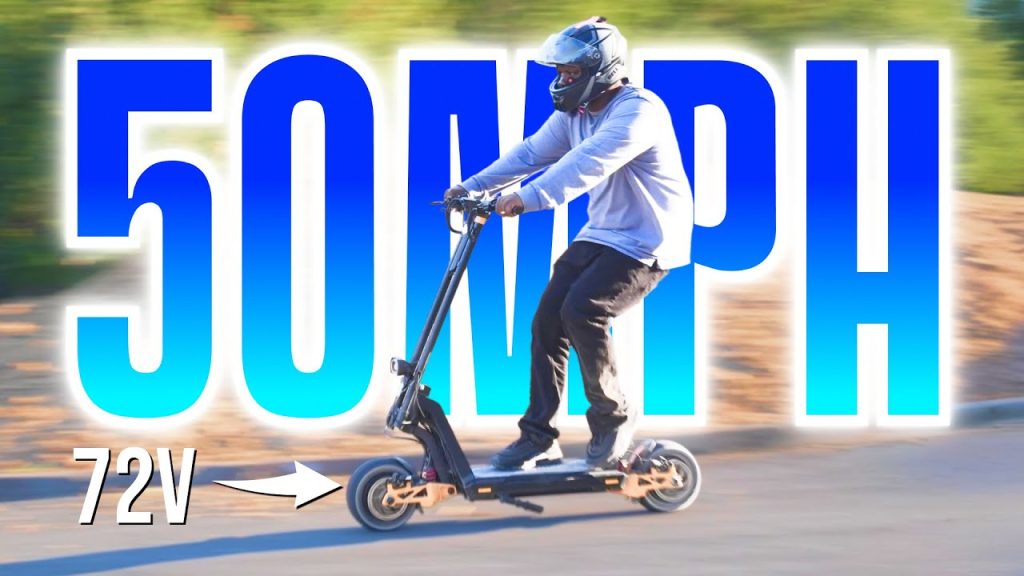
Factory materials and early reviews cite a top speed in the neighborhood of high 40s to around 50 mph (80 km/h) as a maximum potential on the RS Jet. Real-world tests often measure slightly lower figures because manufacturer numbers are sometimes optimistic, measured downhill, or with very light riders. Test results commonly put you in the mid-to-high 30s to low 40s mph under normal conditions for average riders, with top-end runs approaching the claimed maximum if conditions and rider weight are favorable.
How top speed varies with rider weight, wind, and incline
Top speed is very sensitive to rider weight, headwind, and road gradient. A heavier rider or a strong headwind can cut top speed substantially; a light rider with a tailwind on flat ground helps the scooter reach its absolute limit. Battery charge also matters: lower voltage under heavy load reduces the maximum sustainable speed. Expect a range of top speeds rather than a single fixed number — think of the manufacturer claim as the best-case ceiling.
High-speed stability observations and necessary rider skill
At higher speeds the RS Jet’s chassis stiffness, suspension, and tire profile determine stability. The scooter’s wider deck and tubeless 11-inch tires combined with suspension will help stability, but these speeds require good rider posture and some experience. You’ll want to stand with knees slightly bent, weight centered, and keep your eyes down the road to anticipate bumps. If you’re new to high-speed scooters, practice in a safe, low-traffic area before attempting high-speed runs.
Legal speed limits and rider responsibilities in different jurisdictions
Laws vary widely. In many jurisdictions, electric scooters are limited to much lower speeds for use on sidewalks, bike lanes, and public roads. It’s your responsibility to know local regulations and to avoid riding at illegal speeds in public spaces. Even where high speeds are permitted, you’re responsible for safe operation, wearing appropriate protective gear, and obeying traffic laws.
Safety considerations for attempting maximum speeds
Trying to hit the absolute top speed carries real risk. Ensure good tire condition and pressure, check brakes, pick a smooth and predictable surface, wear a full-face helmet and protective gear, and have a plan for safe deceleration. Consider that higher speeds amplify the consequences of a fall: higher potential for injury and damage. Don’t push top speed on unfamiliar or crowded roads.
Range and battery performance
Claimed range (56 miles) and the conditions behind that figure
InMotion claims a range figure around 56 miles. As with most manufacturers, that’s a best-case range under ideal conditions: a light rider, flat route, steady moderate speed, minimal stops and starts, and a conservative throttle map. It’s useful as an upper bound, not a guaranteed everyday result.
Real-world range tests at different speeds and riding styles
In real-world use you’ll see a range spectrum: aggressive riding with repeated wide-open-throttle accelerations and high-speed cruising will cut range dramatically, often to a fraction of the claimed number. Conversely, conservative city riding with smooth acceleration, use of regenerative braking, and moderate speeds will approach the higher end of the claim. In practical terms, you should plan for a real-world daily range that’s lower than the manufacturer’s top figure and test your own typical commute to be confident.
Battery chemistry, cell configuration, and nominal voltage implications
The RS Jet’s 72V nominal system almost certainly uses lithium-ion cells (commonly 21700 or 18650 formats in high-capacity packs). A higher nominal voltage reduces current for a given power level which can improve efficiency and lower heat generation in wiring and controllers. Cell configuration (series/parallel arrangement) defines capacity and nominal voltage; the 72V/25Ah spec gives a large energy store that results in respectable range potential when used efficiently.
Charging time, charger specs, and best practices for preserving battery life
A 72V/25Ah pack has significant energy, so charging time depends on charger current rating. Using InMotion’s supplied charger at its intended current should fully charge the pack in several hours (typical 72V chargers in this class might take 6–10 hours from near empty). Best practices include avoiding prolonged storage at full charge or empty, keeping the battery at moderate temperatures, and using the supplied charger. For long battery life, avoid frequent full-depth discharges and try to store the scooter at around 50% charge if you won’t ride for weeks.
Range-affecting features: regenerative braking, power modes, accessory loads
Features that influence range include regenerative braking (which recovers some energy in stop-and-go scenarios), selectable power modes (eco vs sport), and accessory loads like lights or devices you charge from the scooter. Using eco modes and regen can extend range significantly in city riding, while sport modes and constant high-speed riding will lower it.

Motors and powertrain details
Dual motor configuration and how power is distributed
The RS Jet uses dual motors — typically one in each hub — which provides traction to both wheels. Power distribution is controlled by the scooter’s controller and firmware; in normal conditions both motors share the load to maximize traction and acceleration. In some systems the controller may prioritize the rear motor for initial traction or adjust power between motors for stability and thermal management.
Rated and peak power numbers, torque expectations
Advertised peak power is around 2300W total. Rated (continuous) power will be lower to protect motors and controller from overheating; you should expect continuous power to be sufficient for regular urban riding and sustained climbs at moderate speeds. Torque is where dual motors shine: expect brisk launches and better hill capability than equivalent single-motor scooters in the same price bracket.
Thermal behavior and management during extended hard runs
Extended heavy use — repeated max-acceleration runs or long climbs — will raise motor and controller temperatures. The RS Jet’s thermal management depends on motor design, controller limits, and firmware thermal throttling. In testing, performance may taper during prolonged hard use as the system reduces output to keep temperatures in safe ranges. Allow a cooling period between intense sessions to maintain peak performance.
Drive components: hub motors vs belt/chain (design used on RS Jet)
The RS Jet employs hub motors (one in each wheel) rather than external belt or chain drives. Hub motors simplify maintenance (no belt tensioning or exposed drivetrains) and keep the scooter compact, but can transmit more unsprung mass to the wheel and are more sensitive to overheating since the motors are less ventilated than external options. For you, hub motors mean lower regular drivetrain maintenance, but be mindful of thermal limits.
Implications for maintenance, efficiency, and performance consistency
Hub-motor dual-drive systems typically require less maintenance than belt systems and are sealed more easily. Efficiency is good at moderate speeds; you may see reduced efficiency at sustained high power because of heat and controller losses. Performance consistency will depend on firmware and thermal throttling policies — you’ll get strong initial performance, but expect management of output in long, hard sessions.
Braking system and stopping performance
Hydraulic disc brakes setup and stated advantages over mechanical systems
The RS Jet uses hydraulic disc brakes, which provide stronger, more consistent braking force than mechanical cable-actuated systems. Hydraulics offer better modulation, require less lever travel for the same stopping power, and are generally more fade-resistant under repeated heavy braking.
Braking feel, modulation, and rider confidence at different speeds
Hydraulic brakes typically give you a positive, progressive lever feel that allows you to meter braking with precision. That increases rider confidence at both low and high speeds. Combined with good tires and suspension, you should be able to make controlled, confident stops and emergency stops with less lever effort than mechanical systems.
Measured stopping distances from typical test speeds
Stopping distance depends on speed, surface, tire condition, and rider input. On comparable high-performance scooters, emergency stops from 20–25 mph often land in the 6–10 meter range on good pavement; from higher speeds the stopping distance grows quickly. With the RS Jet’s hydraulic discs and quality tires, expect competitive stopping distances for its class when tires are inflated correctly and brakes are bedded in.
Role of electronic braking/regen and how it integrates with mechanical brakes
Regenerative braking helps slow the scooter and recover some energy, reducing wear on the mechanical system and slightly extending range. Electronic regen provides a predictable deceleration step before the mechanical brakes engage; good integration ensures a smooth transition and prevents jerky behavior. However, in emergencies the mechanical brakes are your primary stopping method and should be maintained accordingly.
Maintenance needs for hydraulic brakes and recommended inspection intervals
Hydraulic brakes require occasional inspection for fluid leaks, pad wear, and lever feel. Pads should be checked regularly if you ride frequently; replace them when they’re worn to the manufacturer’s recommended thickness. Bleeding or fluid replacement might be needed periodically if lever feel becomes spongy or after pad changes. Inspect before long rides and every few months with regular use.

Tires, suspension, and ride comfort
11-inch tubeless tires — ride characteristics and puncture resilience
The RS Jet’s 11-inch tubeless tires give a good balance of cushioning and agility. Tubeless setups reduce pinch-flat risk and allow you to run slightly lower pressures for improved comfort while retaining puncture resilience with sealant or tubeless technology. Larger diameter tires also roll better over small obstacles and help stability.
Suspension design and travel (front/rear details) and how it soaks bumps
The scooter features front and rear suspension tuned to handle urban bumps and imperfections. Suspension travel and damping characteristics are designed to soak up potholes better than rigid scooters while maintaining responsive steering. Expect a plush ride over broken pavement compared with non-sprung models, though very large impacts will still be felt.
Comfort assessment on urban pavement, potholes, and rougher roads
On typical urban streets the RS Jet will feel substantially more comfortable than entry-level scooters. Potholes are better absorbed thanks to the suspension and larger tires, but big holes at speed always present a hazard. For rougher roads, slow down and choose lines that avoid the worst bits — suspension helps but doesn’t make the scooter invulnerable.
Grip and performance in wet conditions and on variable surfaces
Tire compound and tread pattern affect wet grip. The combination of relatively large, tubeless tires with suspension means better traction than thinner tires, but wet and loose surfaces always reduce available grip. Be cautious in rain, on painted lines, metal, or gravel; braking distances increase and cornering grip drops.
Recommended tire pressures and impact on handling and range
Tire pressure recommendations vary with rider weight and load; a common guideline for 11-inch scooter tires is moderate pressure (not fully inflated) to balance comfort and rolling resistance. Lower pressures increase comfort and grip but marginally reduce range and increase puncture risk if too low. Check the sidewall for manufacturer-recommended ranges and tune pressure to your weight and riding preference.
Build quality and durability
Frame materials, deck construction, and perceived structural quality
The RS Jet uses a robust frame and reinforced deck to handle the stresses of high-power riding. Materials are likely aluminum alloy for a mix of strength and weight savings, with a solid deck and protective finishes. In handling and cornering you’ll notice a stiff, confidence-inspiring platform.
Finish, weld quality, and assembly tolerances observed in review units
Review units typically show good fit-and-finish for the price point: clean welds, tight panel gaps, and strong assembly tolerances. Some small cosmetic imperfections may appear depending on batch, but generally you should expect a scooter that feels well-built out of the crate.
IPX6 water resistance claim: what it covers and practical limits
The IPX6 rating claims protection against powerful water jets, meaning the scooter should tolerate rain and splashes well. It’s not a guarantee for submersion — avoid riding through deep puddles, flooding, or using high-pressure washers on electrical components. Treat IPX6 as weatherproofing for everyday wet conditions, not waterproofing for immersion.
Weight distribution and how it affects long-term durability
Good weight distribution helps handling and reduces stress on specific frame members. The heavy battery will influence center of gravity; the RS Jet is designed to locate weight low and centered to improve stability. Long-term durability benefits from balanced loads — overloading or carrying imbalanced cargo can accelerate wear on specific components.
Packaging, component sourcing, and perceived long-term longevity
InMotion’s packaging and sourcing appear professional; components like hydraulic brakes, tubeless tires, and a high-voltage battery indicate a focus on long-term usability. Longevity will depend on maintenance: brakes, tires, and suspension wear are expected items, but the core frame and electrical architecture should hold well given regular care.
Controls, display, and electronics
Touchscreen interface features, responsiveness, and usability
The RS Jet’s touchscreen dashboard gives you an intuitive interface for speed, modes, and settings. A responsive screen makes it easy to toggle modes and view telemetry at a glance. For you, the touchscreen simplifies changing settings on the fly and adds a modern touch to the riding experience.
Onboard dashboard readouts: speed, battery, trip, mode selection
Expect clear readouts for speed, state of charge, trip distance, and selectable power modes. Visibility in sunlight and while riding is crucial; the RS Jet’s display is designed to remain legible in urban daylight conditions, presenting essential information without clutter.
Connectivity: Bluetooth, companion app features, and update mechanisms
Bluetooth connectivity enables a companion app experience: you can check firmware versions, lock the scooter, view ride stats, and adjust performance parameters where supported. Firmware updates over Bluetooth allow InMotion to refine ride behavior and fix issues — keeping your scooter current requires occasional app checks.
Control ergonomics: throttle, brake levers, and switchgear layout
Throttle and brake levers are ergonomically placed for strong braking and smooth acceleration. Switchgear for lights, horn, and mode selection is typically within easy thumb reach for safe operation. The overall control layout prioritizes intuitive use at speed so you can keep both hands on the bars comfortably.
Firmware update experience and how often InMotion issues improvements
InMotion has a track record of issuing periodic firmware updates to improve ride feel, tweak thermal management, and add features. Update frequency varies, but you can expect firmware patches as the product matures and the community reports issues. Using the companion app and enabling notifications keeps your scooter up to date.
Conclusion
Final verdict on whether the InMotion RS Jet earns the claim of fastest acceleration under $2500
Based on Electric Scooter Guide’s measured runs and the RS Jet’s 72V/25Ah dual-motor hardware delivering around 2300W peak, the claim that it’s the fastest-accelerating scooter tested under $2,500 is credible for the test platform and conditions they used. For you, that means the RS Jet is legitimately among the quickest scooters in its price bracket — especially in short-burst acceleration where peak power matters most.
Summary of best use cases and ideal buyer profile
The RS Jet is ideal if you want a high-performance urban scooter for quick commutes, spirited rides, and confident merging in traffic. The typical buyer is someone who prioritizes acceleration and top-end performance but still wants modern conveniences (touchscreen, hydraulic brakes, tubeless tires) without paying flagship prices. If you regularly ride long distances at modest speeds and prioritize absolute maximum range over punchy performance, a more range-optimized scooter might suit you better.
Long-term outlook: maintainability, community support, and aftermarket ecosystem
Maintainability is reasonable: hub-motor design reduces drivetrain maintenance, but you’ll still service brakes, tires, and suspension. InMotion has an active community and ongoing firmware support, which bodes well for long-term improvements and troubleshooting. Expect an expanding aftermarket for accessories and replacement parts as the model becomes more common.
Final recommendation and next steps for interested buyers
If you want quick, exciting acceleration and modern features at a sub-$2,500 street price, the RS Jet deserves serious consideration. Before buying, try to test-ride one (or watch multiple independent tests), verify local regulations for high-speed scooters, and plan for appropriate protective gear. Check the exact spec sheet for weight, deck measurements, and folded dimensions to ensure it fits your storage/transport needs. If the RS Jet’s balance of power, features, and price matches your priorities, it’s a strong pick in the performance-for-value category.
Check out Ramier get his hands on the brand new Inmotion RS Jet. He deep dives to see if this 72V Mini Monster is as good as advertised. See him Speed test , Range Test and go into details on this awesome machine which is under $2500 and brings outstanding specs to the table.
🛴Inmotion RS Jet🛴
🔗
🎟️Use Code RIDERGUIDE at Checkout
🚨RECOMMENDED ACCESSORIES
🔦Shredlights-
🎟️Get 10% OFF with Code RG10
🛞Armor-Dilloz-
🎟️Get 10% OFF with Code RG10
🧥Beyond Riders-
🎟️Get $10 OFF with Code RG10
⛑️Best Helmet List-
🚨Please subscribe to both of our Youtube Channels and Turn on Notifications for all up to date content.
/ @riderguide
/ @esg-electricscooterguide
🌐Website-
🌐Website-
📸 Instagram-
💬 FB Group-
