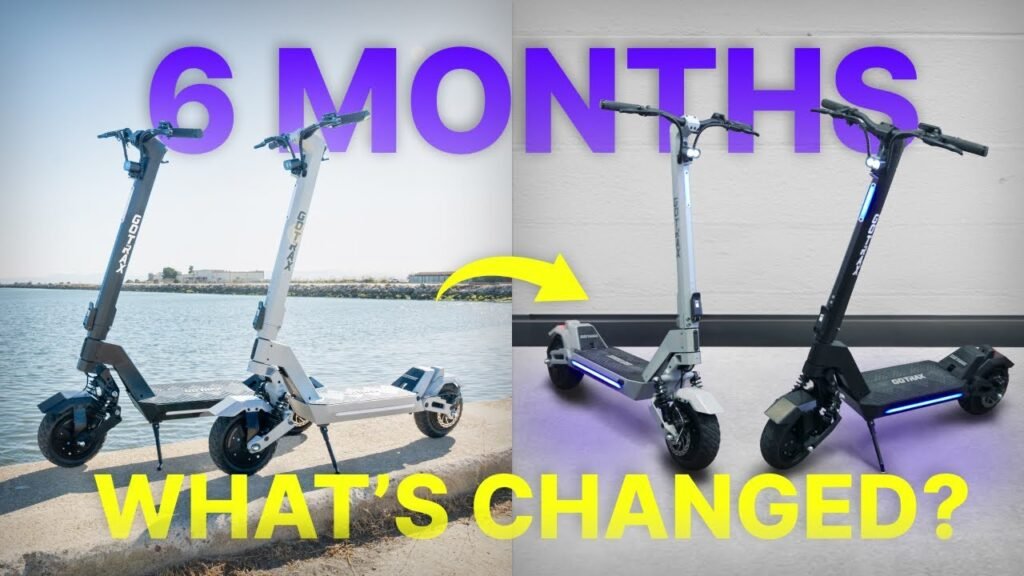
Gotrax GX1 GX2 review: Key Takeaways From the Long-Term Video
Gotrax GX1 GX2 review viewers are usually asking one practical question: are these scooters still smart buys in 2026, or are they just fast-looking spec sheets? Electric Scooter Guide frames the GX1 and GX2 as long-term electric rides, which means the real test is not only speed. It is range, comfort, braking, reliability, maintenance, and whether the scooter still feels solid after regular use.
The original video is Watch Before You Buy! GOTRAX GX1 / GX2 Long-Term Review from Electric Scooter Guide. The opening segment begins around 0:00, where the creator introduces the GX1 and GX2 as scooters worth judging beyond launch-day excitement. The video description also points viewers to the Gotrax GX1, the Gotrax GX2, and the discount code RIDERGUIDE10.
The main takeaway: choose based on your route, not ego. If your riding is flat, short, and predictable, the GX1 may be enough. If you need more performance headroom for hills, heavier loads, or faster riding, the GX2 is the more serious option. If you need something light enough to carry upstairs every day, you may want a smaller commuting scooter instead.
| Buyer type | Best fit | Why |
|---|---|---|
| Short city trips | GX1 or smaller commuter | Enough power for practical rides without overbuying |
| Hills or heavier riders | GX2 | More performance margin and stronger acceleration |
| Apartment carry-up | Consider lightweight scooters | Weight matters more than top speed |
| Rough paths or trails | Consider off-road scooters | Suspension, tires, and durability become priorities |

What Electric Scooter Guide Tested in the GX1 and GX2
This article is based on Electric Scooter Guide’s YouTube video and long-term review format, not just the short product listing copy found on retailer pages. According to Electric Scooter Guide, the most useful electric scooter reviews compare real-world performance against brand claims. That matters because advertised numbers are often measured in ideal conditions: lighter riders, smooth pavement, warm temperatures, and conservative speeds.
As demonstrated in the video, the GX1 and GX2 are evaluated as scooters you might actually own, charge, fold, brake, and maintain. The expected Rider Guide-style categories include top speed, range testing, ride quality, build quality, hill climbing, braking performance, value ranking, and possibly an RG Score if the model appears in their tested and ranked scooters database.
That difference matters. YouTube search results and YouTube video recommendations can push whatever has the most recent views or audience engagement, but purchase decisions should rely on repeatable ride data. A scooter that looks exciting in a short clip may be annoying if the stem rattles, the deck is cramped, the brakes need constant adjustment, or the actual range falls far below your daily commute.
In our experience using review data for buying decisions, the strongest tests answer three questions: how far it goes, how safely it stops, and how well it feels after the novelty wears off. The creator explains this type of ownership thinking throughout the video, especially by positioning the Gotrax models as long-term scooters rather than one-ride impressions.
Gotrax GX1 GX2 Review: Specs That Matter Most
A useful Gotrax GX1 GX2 review should start with the specs you can feel every day. Motor output affects acceleration and hill climbing. Battery size affects range and weight. Tire diameter changes stability and comfort. Suspension design changes how your wrists, knees, and back feel after ten miles of rough pavement.
When comparing the GX1 and GX2, pay close attention to these categories: motor power, battery capacity, scooter weight, advertised top speed, tested real-world range, tire size, suspension type, folding design, deck space, braking setup, and charger compatibility. The creator’s product references are listed directly in the video description: Gotrax GX1 link and Gotrax GX2 link.
Long-term reviews are more useful than launch reviews because scooters change with use. Tires lose tread. Brake pads wear down. Rotors can develop noise. Batteries slowly lose capacity over charge cycles. Stems and folding latches may loosen. Water resistance limits also become clearer after months of commuting, wet roads, storage, and cleaning.
Price class is the other big context point. Under $500 scooters usually prioritize affordability and simple commuting. Under $1,000 scooters often add better range, brakes, and ride comfort. Under $2,000 scooters move toward entry-level performance scooters with stronger motors, larger batteries, and better suspension. The GX1 and GX2 sit closer to performance-oriented commuting scooters than basic budget electric scooters, so you should judge them against that job.

Range, Top Speed, and Real-World Performance
Range testing is where many scooters either prove themselves or disappoint owners. Advertised range is usually measured under gentle conditions, while real-world range depends on rider weight, terrain, temperature, tire pressure, speed mode, wind, hills, and stop-and-go traffic. A lb rider on flat pavement at moderate speed may see very different results from a lb rider climbing hills in cold weather.
The video shows how the GX1 and GX2 behave beyond the spec sheet, especially when ridden as practical electric rides rather than showroom products. According to Electric Scooter Guide’s review style, tested range is more useful than claimed range because it reflects energy use under repeatable riding conditions. That is why Rider Guide comparisons are helpful when you are choosing among commuting scooters, speed scooters, and budget electric scooters.
Top speed should be treated responsibly. Faster scooters require stronger brakes, more stable geometry, better tires, and better protective gear than slower under $500 scooters. At higher speed, a small pothole, loose grip, wet painted line, or sudden braking mistake has bigger consequences.
Use this range planning rule before buying:
- Measure your round-trip commute, not just one way.
- Add a 30% battery buffer for detours, hills, wind, and battery aging.
- Account for cold weather, which can reduce usable range.
- Avoid regular 0% drains, because deep discharges are harder on lithium batteries.
- Check tire pressure weekly, since low pressure reduces range and raises flat risk.
Ride Quality, Build Quality, and Long-Term Comfort
Ride quality comes from the parts your body notices first: suspension travel, tire diameter, tire type, deck size, handlebar width, throttle response, stem rigidity, and braking smoothness. A scooter can have strong acceleration and still feel tiring if the deck is cramped, the stem flexes, the throttle is jerky, or every crack in the pavement reaches your wrists.
As demonstrated in the video, long-term comfort is about vibration control, stability, and confidence at speed, not only acceleration numbers. The creator explains that scooters like the GX1 and GX2 need to be judged over time because ride comfort changes as tires wear, bolts loosen, brake pads settle, and suspension parts break in. This is exactly where long-term electric scooter reviews add value.
Before buying, inspect the build quality signals you can actually verify. Look at weld consistency, cable routing, folding latch play, fender security, display visibility in sunlight, brake lever feel, charging port cover fit, deck grip, and exposed water ingress points. None of these details sound exciting, but they affect daily ownership more than a flashy top speed claim.
Category matters too. Lightweight scooters prioritize portability. Commuting scooters balance range, comfort, and weight. Seated scooters add comfort but reduce portability. Performance scooters raise speed and braking needs. Off-road scooters need stronger suspension, knobbier tires, and more ground clearance. The GX1 and GX2 should be compared against the category you actually need, not every scooter on the market.
Beginner Buying Checklist Before Choosing the GX1 or GX2
If you are buying your first scooter, do not start with top speed. Start with your route. A beginner buying checklist prevents overspending, underbuying, and choosing a scooter that looks great online but feels wrong after one week.
- Define your route: flat bike lanes, rough streets, hills, bridges, sidewalks, or mixed traffic.
- Measure distance: calculate round-trip miles and add at least 30% battery buffer.
- Check storage: confirm folded dimensions fit your hallway, trunk, office, or apartment.
- Confirm carrying weight: lifting lb occasionally is different from lifting lb daily.
- Review local laws: speed limits, sidewalk rules, helmet rules, and age limits vary by region.
- Choose tire type: pneumatic tires ride better, while solid tires reduce flats but feel harsher.
- Compare brakes: dual brakes are better for faster scooters and heavier riders.
- Budget accessories: helmet, lights, lock, pump, sealant, tools, and gloves can add real cost.
Motor power is simple when you remove the hype. Single-motor scooters can be enough for flat city commuting. Dual-motor setups help with hills, heavier riders, faster acceleration, and higher speeds, but they use more battery and usually add weight.
The six beginner factors are brakes, tires, suspension, IP ratings, portability, and real-world range. Choose a smaller budget scooter for short flat trips, a commuter scooter for daily mixed routes, and a performance or off-road scooter only if speed, hill climbing, or rough pavement genuinely matter.
Safety, Laws, and Responsible Riding in 2026
Safety is not a side note, especially with performance-oriented electric rides. In 2026, many cities are still adjusting electric scooter rules, and riders should assume laws can differ by city, state, province, or country. Check age limits, helmet requirements, speed caps, sidewalk restrictions, bike-lane access, registration requirements, insurance rules, and whether scooters are allowed on public transit.
Start with gear. Wear a certified helmet every ride. Add front and rear lights, side visibility, reflective ankle bands or a reflective vest, and gloves. If you ride near traffic, visibility from the side matters as much as visibility from the front because drivers often cross your path at intersections.
Braking technique is a skill, not a panic reaction. Shift your weight slightly back, bend your knees, use both brakes progressively if equipped, and avoid grabbing the front brake suddenly. Before riding in traffic, test your stopping distance in an empty lot at mph, mph, mph, and your normal cruising speed.
Wet and night riding require extra caution. Reduce speed, avoid painted road markings, metal plates, leaves, and deep puddles. Check the scooter’s IP rating, but do not assume water resistance means waterproof. Heavy rain, pressure washing, wet storage, and repeated puddle impacts can still damage bearings, displays, controllers, and connectors.
Maintenance and Total Cost of Ownership
The purchase price is only the first number. Total cost of ownership includes tires, tubes or sealant, brake pads, rotors, replacement batteries, chargers, tools, locks, lights, repairs, shipping costs, warranty coverage, and depreciation. A scooter that is $200 cheaper at checkout may cost more over two years if parts are harder to find or repairs require expensive shipping.
According to our research into long-term scooter ownership, the most common preventable problems start with tire pressure, brake adjustment, loose bolts, water exposure, and battery neglect. The creator’s long-term framing is useful here because it pushes buyers to think beyond the first ride. A scooter should be judged by how easy it is to keep running.
Use this simple maintenance plan for GX1 or GX2 ownership:
- Weekly: check tire pressure, inspect tires for embedded debris, confirm lights work, and listen for new rattles.
- Monthly: inspect brake pads, rotors, folding latch play, handlebar bolts, fenders, and cable routing.
- After rough rides: tighten visible fasteners and check for stem movement or brake rub.
- Before storage: clean the deck and charging port, dry the scooter, and store the battery around 40-80% charge.
Battery care is straightforward. Avoid leaving the scooter fully drained. Do not store it in extreme heat or freezing temperatures. Recharge before a long storage period if the battery is low. Even with an IP rating, avoid pressure washing, deep puddles, heavy rain, and wet storage because moisture can shorten the life of bearings and electronics.
How the GX1 and GX2 Compare With Other Scooter Types
The GX1 and GX2 make the most sense when placed inside the broader scooter market. Compared with under $500 scooters, they are more serious electric rides with stronger performance goals. Compared with under $1,000 scooters, you should expect better comfort, braking, or power depending on sale price. Compared with under $2,000 scooters, they compete with entry-level performance models where ride quality, build quality, and value ranking matter.
Rider Guide and Electric Scooter Guide comparisons help because tested and ranked scooters are easier to judge than marketing pages. Real data such as range testing, top speed, braking distance, ride quality, build quality, value ranking, and RG Score gives you a clearer picture of whether a scooter is quick, comfortable, safe, and worth its price.
| Category | Best use | Typical price | Strengths | Drawbacks | Buyer profile |
|---|---|---|---|---|---|
| Lightweight | Short trips, transit | Under $500-$1,000 | Easy to carry | Less range and comfort | Apartment or train commuters |
| Commuter | Daily city rides | $700-$1,500 | Balanced range and comfort | Not always exciting | Practical daily riders |
| Performance | Speed and hills | $1,200-$2,500+ | Power and braking | Heavy and costly | Experienced riders |
| Seated | Comfort cruising | $800-$2,000 | Less standing fatigue | Bulkier storage | Longer relaxed rides |
| Off-road | Rough paths | $1,500-$3,000+ | Suspension and traction | Heavy, less portable | Trail and rough-road riders |
If the GX1 or GX2 fits your route and storage needs, the video’s long-term review can support a buy-now decision. If portability, sidewalk rules, speed limits, or apartment stairs are deal breakers, keep researching lighter commuting scooters before purchasing.
How to Use YouTube and Rider Guide Research Before Buying
YouTube is useful, but you need to read it correctly. YouTube search results and YouTube video recommendations may differ based on watch history, audience engagement, Google privacy settings, cookies and data, personalized ads, and non-personalized content choices. Two buyers searching the same scooter can see different recommendations, so do not rely on one suggested video.
Prioritize electric scooter reviews that show testing, disclose affiliate links, compare alternatives, and update opinions after long-term use. The Electric Scooter Guide video does disclose product links in the description, including the GX1, GX2, and RIDERGUIDE10 code. That transparency helps you understand where the purchase links come from while still judging the scooter on the review content.
Comments are useful, but treat them like field reports rather than final proof. One complaint about a flat tire may be random. Repeated complaints about flats, brake noise, loose stems, charger faults, water damage, or warranty delays are more meaningful. Look for patterns across the video comments, Rider Guide rankings, retailer reviews, and owner forums.
Use this research process before choosing:
- Watch the Electric Scooter Guide video from start to finish.
- Check Rider Guide rankings for tested data and value ranking.
- Compare owner comments for repeated problems.
- Verify warranty terms, return windows, and parts availability.
- Check local electric scooter laws.
- Price accessories before calculating your budget.
- Decide between the Gotrax GX1, Gotrax GX2, or a competing scooter only after matching the scooter to your route.
Final Verdict: Gotrax GX1 GX2 Review Summary and Next Steps
This Gotrax GX1 GX2 review summary points to a simple conclusion: the GX1 and GX2 are worth considering if you want more than a basic budget scooter, but the right choice depends on your route, storage, laws, and comfort needs. Electric Scooter Guide’s long-term angle is valuable because it asks whether the scooters still make sense after real riding, not just whether they look impressive on paper.
If you ride short, flat routes and want a capable scooter without stepping too far into performance weight and cost, start by comparing the GX1 against commuter scooters in its price range. If you deal with hills, heavier rider weight, faster traffic, or want more acceleration headroom, the GX2 is the more logical step-up. If you need to carry the scooter upstairs every day, neither speed nor suspension matters if the weight becomes annoying.
Your next steps are practical. Watch the original Electric Scooter Guide video, compare the GX1 and GX2 links, check whether RIDERGUIDE10 is active, and calculate your true ownership cost with helmet, lock, pump, brake pads, tire supplies, and possible repairs. Then verify local rules before riding.
The smartest buy is not always the fastest scooter. It is the scooter you will ride safely, maintain easily, store without hassle, and trust on the same route week after week.

Key Takeaways
- Judge the GX1 and GX2 as long-term electric rides, not just by top speed or advertised range.
- Use real-world range planning: calculate your round trip, then add a 30% battery buffer.
- The GX2 makes more sense for hills, heavier riders, and performance needs; the GX1 is better for simpler commuting.
- Maintenance, safety gear, local laws, and accessories can change the real cost of ownership.
- Watch Electric Scooter Guide’s original video, compare Rider Guide data, read owner comments, and verify warranty terms before buying.
Frequently Asked Questions
How do you unlock the max speed on an electric scooter?
Some electric scooters use app settings, display menus, or region-locked modes to control maximum speed. Follow the manufacturer’s manual for the Gotrax model you own, and do not bypass legal speed limits in your area. Faster riding also requires better protective gear and more braking distance.
How to ride an electric scooter for the first time for beginners?
Start in an empty parking lot, wear a helmet, check tire pressure, and test both brakes before using speed modes. Push off with one foot before pressing the throttle, then practice slow turns, smooth braking, and emergency stops. Do not begin in traffic until the controls feel natural.
What is the most common problem with electric scooters?
Common electric scooter problems include flat tires, low tire pressure, brake adjustment, loose bolts, range loss, charger faults, and water damage. Many issues are preventable with weekly tire checks, monthly brake inspections, and careful storage away from heavy rain or extreme temperatures.
How do I change the settings on my e-scooter?
Settings are usually changed through a display button sequence or a companion app, depending on the scooter. Check the Gotrax manual before changing speed modes, cruise control, units, lighting, or brake-related settings. Avoid changing hidden settings if you do not understand what they control.
Is the Gotrax GX2 worth it over the GX1?
The GX2 is worth considering if you need more performance for hills, heavier rider weight, faster acceleration, or longer high-speed riding. The GX1 may be the smarter pick if your route is shorter, flatter, and you want to avoid unnecessary cost or weight. Match the scooter to your route before choosing.