
If you’re planning to buy your first electric scooter, “Essential Electric Scooter Buying Tips from Hobart’s Reviews” gives you clear, friendly guidance so you avoid common mistakes and get the right ride for your needs. You’ll get practical pointers that save time and money while keeping safety front and center.
You’ll find five must-know tips covering parts availability and warranties, how manufacturer choice and where you buy affect service, the safety gear you should use, and the key specs to check before you commit. A simple buying checklist and recommended accessories are included to help you make a confident purchase.

Manufacturer reputation and support
Before you buy, take a moment to evaluate the manufacturer itself — the company behind the scooter matters as much as the specs on paper. A strong reputation and reliable support network reduce long-term headaches, give you confidence that spare parts will be available, and make warranty claims and repairs much smoother. You should treat manufacturer reputation as part of the total cost of ownership.
Research brand history and track record for scooter design and recalls
Look into how long the brand has been designing and selling scooters, and whether it has had notable product recalls or widespread failures. You want a company with a consistent design philosophy, a track record of iterating on problem areas, and transparency about past issues. Brands with recurring recall problems or secrecy about defects are higher risk for future troubles.
Check community forums and owner groups for consistent feedback
Joining community forums, owner groups, and social media discussions lets you hear from real riders about long-term reliability and daily issues. Pay attention to recurring themes: battery failures, side effects after a season, or weak folding clamps. One-off complaints are inevitable, but systematic problems reported by many owners should raise a red flag.
Assess manufacturer responsiveness to technical questions and complaints
Send a pre-sale question to the manufacturer or an authorized dealer and note how quickly and thoroughly they respond. After-sales responsiveness matters more — you want a company that fields technical questions, acknowledges issues, and provides clear steps for repair or replacement. Slow, vague, or evasive replies often reflect a weak support structure.
Prefer companies that publish parts lists, schematics, or repair guides
Manufacturers that publish parts lists, schematics, or repair guides make your life easier when you need to fix something. If you can see exploded diagrams, part numbers, and wiring schematics, you’ll be better positioned to maintain or repair your scooter yourself or to find compatible parts from third parties. Openness like this is a sign of customer-focused design.
Verify presence of authorized service centers or trained technicians
Check whether the brand has authorized service centers, trained technicians, or franchised dealers in your region. Local support saves time and money compared to shipping a scooter back to a distant warehouse. If the company relies solely on shipped replacements, factor that into your decision and look for alternative brands with a local service footprint.
Warranty and spare parts availability
Warranty terms and the ease of securing spare parts determine how protected you are after purchase and how long the scooter will remain useful. A good warranty reduces your risk, while readily available parts keep downtime and repair costs low.
Confirm warranty length, coverage details, and what voids the warranty
Read the warranty carefully: check the length of coverage, what components are covered, and specific exclusions. Understand what actions (e.g., unauthorized repairs, water exposure, or using non-approved chargers) might void the warranty. Don’t assume standard coverage — ask explicitly about wear items and labor costs.
Ask whether batteries, motors, controllers and frames are covered
These are the most expensive components to replace. Ask whether the battery pack, motor(s), controller, and frame are covered under warranty and for how long. Some brands offer tiered warranties where electronics are covered for a year but frames last longer; make sure those timelines fit your expected usage.
Check stock availability of common replacement parts before buying
Before you commit, confirm whether common components like tires, tubes, brake pads, chargers, display modules, and fuses are in stock or easily ordered. A scooter whose simple replacement parts are discontinued will cost more and keep you off the road longer if something breaks.
Look for vendor or third-party parts suppliers and compatibility options
Even if the manufacturer’s stock is limited, third-party suppliers or aftermarket parts can keep your scooter serviceable. Check compatibility options for aftermarket batteries, tires, and controllers and whether the community supports conversions or upgrades. A healthy aftermarket ecosystem is a strong plus.
Understand shipping times and costs for replacement parts in your region
Parts availability is one thing; shipping time and cost are another. Find out how long it takes to receive parts and whether there are local warehouses or regional distributors. High shipping costs or weeks-long delays can make otherwise minor repairs into major disruptions.

Where to buy and authorized retailers
Where you buy affects warranty validity, return options, and after-sales support. Buying through the right channel gives you protection and recourse if things go wrong, while the wrong channel can complicate repairs or leave you without support.
Compare buying from manufacturer, authorized dealers, and marketplaces
Compare the pros and cons of buying directly from the manufacturer, from an authorized dealer, or through general marketplaces. Manufacturer purchases often give the best warranty and latest firmware, dealers may provide test rides and local service, and marketplaces can offer price savings but may pose greater risk for warranty or authenticity.
Use authorized retailers to preserve warranty and gain after-sales support
Buying from an authorized retailer usually preserves warranty coverage and ensures you can access official parts and service. Unauthorized sellers or grey market imports can invalidate warranties and reduce your options if you need repairs. When in doubt, ask the seller to confirm warranty status in writing.
Inspect return, repair and refund policies for each seller
Before purchase, check the seller’s return window, restocking fees, and repair turnaround policies. Know who pays shipping for warranty claims and whether a local dealer handles repairs or the unit must be shipped to the manufacturer. Clear return and repair terms give you leverage if the scooter doesn’t meet expectations.
Consider local dealers for in-person test rides and easier service
Local dealers let you test ride, feel build quality, and check ergonomics before you buy — which is invaluable. They also provide convenient drop-off for maintenance and warranty repairs. If you plan to ride daily, having a local partner for service will save you time and hassle.
Beware of grey-market imports and models with unknown spec changes
Be cautious about grey-market units or sellers who relabel models with different batteries or controllers. These units might be cheaper but often lack reliable support, authentic parts, or accurate specs. Verify serial numbers and ask whether the retailer is an authorized distributor to avoid surprises.
Battery, range, and battery care
Battery performance impacts daily usability, safety, and long-term operating costs. Understand what advertised range really means, how battery chemistry affects life and safety, and how to care for cells for maximum lifespan.
Understand advertised range vs realistic range under your riding conditions
Advertised ranges are typically measured under ideal conditions (light rider, flat terrain, smooth road, minimal stops). Real-world range will vary with rider weight, speed, hills, weather, and stop-start traffic. Estimate conservatively — plan for 50–70% of advertised range for everyday riding unless you know how the number was tested.
Evaluate battery capacity (Wh), chemistry (typically Li-ion), and cell supplier
Look for battery capacity in watt-hours (Wh) rather than nominal voltage or amp-hours alone. Higher Wh means more energy storage. Confirm cell chemistry (usually lithium-ion) and, if possible, the cell supplier — name-brand cells from reputable manufacturers often offer better longevity and safety than generic cells.
Check charging time, onboard charger quality, and availability of spares
Check how long a full charge takes and whether the scooter includes an onboard charger or external unit. Fast charging is convenient but can shorten battery life if overused. Also ask whether replacement chargers are readily available and cost-effective in your region.
Learn proper charging habits, storage charge level, and temperature limits
Adopt charging best practices: avoid full discharges where possible, store batteries around 40–60% charge if you won’t ride for weeks, and keep packs away from extreme cold or heat. Most Li-ion packs dislike temperatures below freezing and above about 45°C — follow manufacturer guidance to prevent degradation.
Plan for battery replacement cost and expected cycle life
Batteries will eventually need replacement. Ask how many full cycles the manufacturer expects before capacity drops significantly and what a replacement pack costs. Factor that future expense into your total ownership budget and consider whether aftermarket or refurbished packs are viable options.

Motor power and performance
Motor type and power determine acceleration, hill-climb ability, and how the scooter feels in everyday use. Choose a setup that matches your terrain and intended use rather than chasing peak horsepower numbers.
Match motor type (hub vs mid-drive) and rated power to intended use
Hub motors are common, simpler, and often lower maintenance; mid-drive motors (less common on scooters) can offer better hill performance and more efficient power transfer. Consider whether you’ll be commuting on flat roads or tackling steep hills and select the motor type and power accordingly.
Look at continuous power and peak power specifications, not just one figure
Manufacturers sometimes quote peak power, which is a short burst rating, not sustainable output. Check continuous (rated) power for realistic performance expectations and how the controller handles power delivery. Continuous power affects sustained climbing and load handling.
Consider torque and hill-climbing ability for your local terrain
Torque matters more than top speed if you frequently face inclines or need quick acceleration from stops. Higher torque will help you clear hills without overheating the motor or draining the battery quickly. If your area has steep grades, prioritize torque and cooling capability.
Review top speed in context of range, rider weight, and legal limits
Top speed claims often ignore the effect of rider weight, wind, and hills. If you plan to ride near legal speed limits, understand that doing so will reduce your range significantly. Balance speed desires with range and check local regulations to avoid buying an overpowered scooter that you legally can’t use.
Assess drivetrain robustness and controller thermal management
A strong drivetrain (gears, belts, or direct drive) and a controller with good thermal management are critical for reliability. Overstressed controllers or poorly cooled motors fail sooner. Look for scooters with temperature sensors, rated continuous outputs, and documented protections against overheating.
Brakes, tires, and suspension
Stopping power, traction, and ride comfort affect both safety and daily enjoyment. Choose brake systems and tires that match your riding conditions and maintenance expectations.
Compare brake types: electronic, disc (mechanical/hydraulic), and drum options
Electronic regenerative braking helps recover energy and reduce wear but shouldn’t be your only stopping method. Mechanical or hydraulic disc brakes provide the strongest and most consistent stopping power, especially in wet conditions. Drum brakes are low maintenance but typically less powerful. Consider your climate and braking needs.
Select appropriate tires (solid, tubeless, pneumatic) for comfort and puncture risk
Solid tires are low-maintenance and puncture-proof but provide a harsher ride. Pneumatic tires offer comfort and better traction but are vulnerable to flats unless tubeless setups or liners are used. Tubeless tires reduce puncture risk and allow lower pressures for improved comfort. Pick the tire type that balances comfort and convenience for your routes.
Check suspension presence and travel for rough roads or urban potholes
If you’ll ride over rough roads or many potholes, suspension improves comfort and control. Check the travel and quality of forks and rear shocks; light “comfort” suspensions aren’t the same as robust, serviceable systems. For smoother city streets, firm setups may be fine; for mixed terrain, prioritize good suspension.
Ensure tire sizes and brake components are commonly stocked for maintenance
Verify that tire sizes, inner tubes, brake pads, and rotors are common and easy to source. Unusual wheel sizes or proprietary brake parts can make routine maintenance more expensive and time-consuming. Common standards simplify repairs and let you carry spares.
Evaluate braking performance in wet conditions and emergency stopping
Ask about brake performance in wet weather and during emergency stops. Hydraulic discs perform best in adverse conditions, while some electronic systems reduce effectiveness when wet. Ensure the scooter has reliable, tested stopping power for your local climate.
Build quality, materials, and water resistance
You want a scooter that feels solid, resists corrosion, and protects electrical systems from dust and moisture. This affects safety, longevity, and how much maintenance you’ll face.
Inspect frame materials (aluminum alloys, steel) for strength vs weight
Frames are commonly aluminum or steel; aluminum is lightweight and corrosion-resistant but can crack if poorly designed, while steel is tougher but heavier and may rust. Look for a frame design that balances weight with strength for your rider weight and expected use.
Look for quality welding, fasteners, and corrosion-resistant finishes
Examine the welds, bolts, and paint or powder coat quality. Tight, clean welds and corrosion-resistant fasteners indicate attention to detail. Poor finishes or exposed, untreated metal can lead to rust and loose parts over time.
Verify IP rating for electrical component water and dust protection
Check the IP rating for the scooter’s electrical components (motor controllers, battery enclosure, and display). Higher IP ratings mean better protection against water and dust; this is especially important if you’ll ride in wet climates. Understand that “splash resistant” is not the same as fully weatherproof.
Assess deck size, grip, and ergonomics for prolonged rides
An ample deck with good grip and comfortable standing ergonomics reduces fatigue on longer commutes. Check deck width and material, grip tape quality, and whether the standing posture suits your height and riding style. Small decks can make longer rides uncomfortable and reduce control.
Consider long-term durability for daily commuting and heavier riders
If you’ll be using the scooter daily or you’re a heavier rider, prioritize robust components: thicker frames, sturdier stems, reinforced folding mechanisms, and higher load ratings. Daily-use scooters are exposed to more stress and need parts that hold up to repeated use.
Weight, portability, and folding mechanism
If you’ll carry the scooter public transit or store it in tight spaces, weight and folding design become critical. Balance how you’ll carry the unit against how often you’ll need to lift it.
Balance scooter weight against portability and carrying needs
Heavier scooters often offer more power and battery life but are harder to carry. Think about whether you’ll lift the scooter up stairs, onto buses, or into trunks; choose a weight you can comfortably manage repeatedly. Factor in the handle height and center of gravity for carrying.
Test folding mechanism for ease of use, lock security, and durability
A quick, secure, and durable folding mechanism is essential. Test how easy it is to fold and unfold, how solid the locks feel, and whether the mechanism shows play when extended. A flimsy latch can be a safety hazard and will wear out faster.
Check folded dimensions to fit your transport, storage, or trunk space
Measure folded dimensions to ensure the scooter will fit in your intended storage spot or vehicle. Some compact models fold to small sizes, while others remain bulky even when folded. Knowing your space constraints beforehand avoids surprises.
Confirm if the battery is removable for easier carrying and charging
A removable battery reduces the weight you need to carry and lets you charge indoors separately from the scooter. It also simplifies replacement. If you expect to carry the scooter frequently, a removable pack is a major convenience.
Consider handle height, stem rigidity, and balance for frequent lifting
Handle height affects comfort and how you lift and carry the scooter. Stems should be rigid and secure to avoid wobble while riding and to keep the unit balanced when carried. Test lifting posture to make sure you won’t strain your back or wrists.

Legal considerations and local regulations
Understanding the legal environment prevents fines and keeps you safe. Rules for e-scooters vary widely and change quickly, so make the effort to know the current laws in your area.
Research local laws on maximum speed, power, and where scooters are allowed
Different jurisdictions set limits on top speed, motor power, and where scooters can be ridden. Before buying, check whether the scooter you want complies with local limits for public use. A powerful scooter that exceeds local power laws might have to be registered, restricted, or remain unused on public roads.
Check helmet, age, and licensing requirements in your city or state
Some places require helmets, minimum rider ages, or even licenses for certain classes of electric scooters. Know these requirements to avoid penalties and to plan on the safety gear you’ll need to buy.
Understand rules for riding on sidewalks, bike lanes, and roads
Regulations often specify where scooters may operate: sidewalks may be forbidden, bike lanes preferred, and some roads restricted. Consider how those rules will affect your typical routes and whether you can legally commute the way you intend.
Investigate insurance options and liability coverage for riders
Check whether your homeowner’s or renter’s insurance covers injuries or damage caused while riding, and whether there are specific insurance policies for e-scooters. In some cases, you might want liability coverage or a rider-specific policy, especially if you’ll ride in traffic or carry passengers.
Stay updated on changing regulations that may affect scooter use
E-scooter laws evolve as cities adapt to new technology. Subscribe to local transport updates or community groups to stay informed about changes that could affect speed limits, parking rules, or where scooters are allowed. That way you can avoid surprises and plan purchases that remain compliant.
Conclusion
Choosing the right electric scooter is more than picking the fastest or cheapest model — it’s about ensuring long-term support, safety, and satisfaction. Prioritize manufacturers with good reputations, clear warranties, and accessible parts to minimize future headaches and costs.
Prioritize manufacturer support, warranty, and parts availability when choosing
Place manufacturer support, warranty terms, and spare part availability near the top of your decision criteria. Good support and accessible parts keep your scooter on the road and protect your investment over years of use.
Balance realistic performance needs with safety, legal compliance, and budget
Match the scooter’s real-world performance to your actual needs. Don’t overpay for unnecessary top speed or range; instead, balance performance with safety features, legal compliance, and what you can afford to maintain.
Use real-world reviews, test rides, and community feedback to validate options
Rely on community feedback, independent reviews, and in-person test rides to confirm that a model performs as promised. Specs only tell part of the story — real riders reveal common issues and everyday usability.
Plan for maintenance, accessories, and potential long-term costs before buying
Factor in the cost of maintenance, replacement parts, accessories (helmet, lights, lock), and eventual battery replacement into your budget. Knowing these costs upfront helps you choose a scooter that’s affordable to own, not just to buy.
Make a confident purchase decision by combining specs, hands-on testing, and seller reliability
When you combine careful spec analysis, hands-on testing, community input, and a reliable seller or authorized dealer, you’ll be able to make a confident purchase that fits your needs and keeps you riding happily for years.
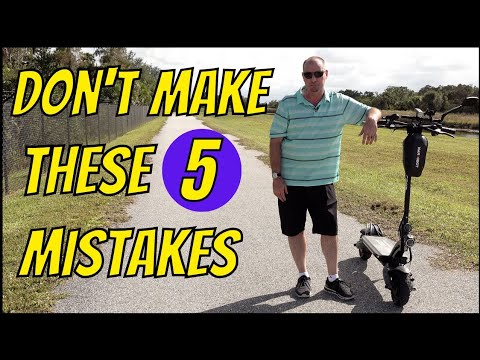
Don’t Buy Your First Electric Scooter Without Watching This First! These are ESSENTIAL electric scooter buying tips you NEED To Know BEFORE You Buy Your First E Scooter!
Did you know not all electric scooter manufacturers have parts available if something breaks? Did you know not all E Scooter manufacturers offer a Warranty? Did you know that it matters what electric scooter manufacturer you buy from and where you buy it? Do you know what safety gear is required for riding electric scooters? This is the ultimate electric scooter buying guide in today’s episode of Hobart’s Reviews!
Check Out My E-Scooter Merch “Charged Up Threads” –
Purchase The Nanrobot D6+
Nanrobot Electric Scooters (All Models) –
Official Nanrobot Accessories:
Nanrobot Waterproof Scooter Bag –
Nanrobot Steering Damper D6+ –
Nanrobot D6+ Seat –
Nanrobot Fast Charger –
Nanrobot Standard Charger –
Nanrobot D6+ Off Road Tires –
Nanrobot D6+ Street Tires –
Nanrobot D6+ Motor Replacement –
Nanrobot D6+ Kickstand –
Nanrobot D6+ Speed Controller –
My Gear….
LS2 Assault Helmet (15 colors) –
Olight Allty 2000 Bike Light –
NiteRider Bullet 200 Tail Light –
BriskMore Bike Rearview Mirror –
Handlebar Extender –
187 Killer Pads Set –
Subscribe To My Channel – / hobartsrevi. .
Check Out My Website –
Check Out My Other Videos – / hobartsreviews
Social Media –
Follow Me On Social Media : @HobartsReviews
Facebook: / hobartsreviews
Twitter: / hobartsreviews
Instagram: / hobartsrevi. .
Disclaimer:
Links to products above are affiliate links. If you click on the link I may make a small commission off your purchase that helps out my channel. My commissions come from the company and will not be added to the cost of your purchase. I have not been paid by the company to include these links or products in my video.
