TL;DR — Key Takeaways
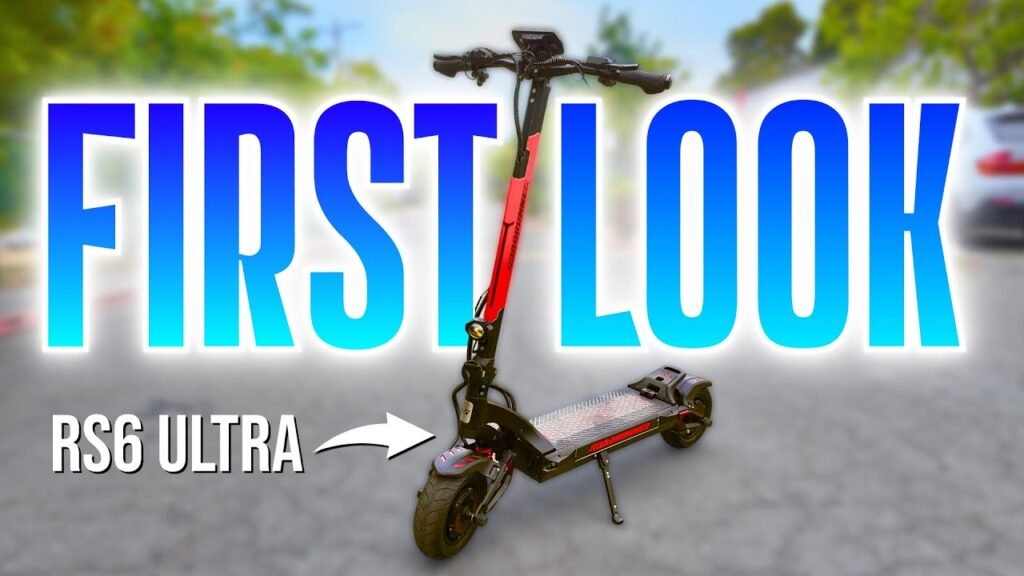
Focus: The video by Electric Scooter Guide presents a hands-on first impression of the RoadRunner RS6 Ultra. The creator explains that the RoadRunner RS6 Ultra blends the best features of the RS5 Max and RX7 while promising high-end performance (video 0:15–0:40).
Top claims: Dual 1500W motors, a 60 V battery architecture, a claimed 60 mph top speed and a claimed 80-mile range, 11″ PMT tires, KKE adjustable suspension, and four-piston hydraulic brakes (video 0:20–0:45).
Verdict preview: As demonstrated in the video, the creator reports a powerful, stable ride with excellent throttle response in short runs. Full ESG lab tests (speed, range, braking, hill climbs) are promised for August and will verify these claims (video 0:00–0:20, 4:00–4:30). For the full review and to jump to specific moments, watch the original at the video.

RoadRunner RS6 Ultra: Quick Specs & Manufacturer Claims
The video lists the headline specs for the RoadRunner RS6 Ultra: dual 1500W motors, a claimed 60 V battery setup, a manufacturer-claimed 60 mph top speed, and a claimed 80-mile range (video 0:20–0:45).
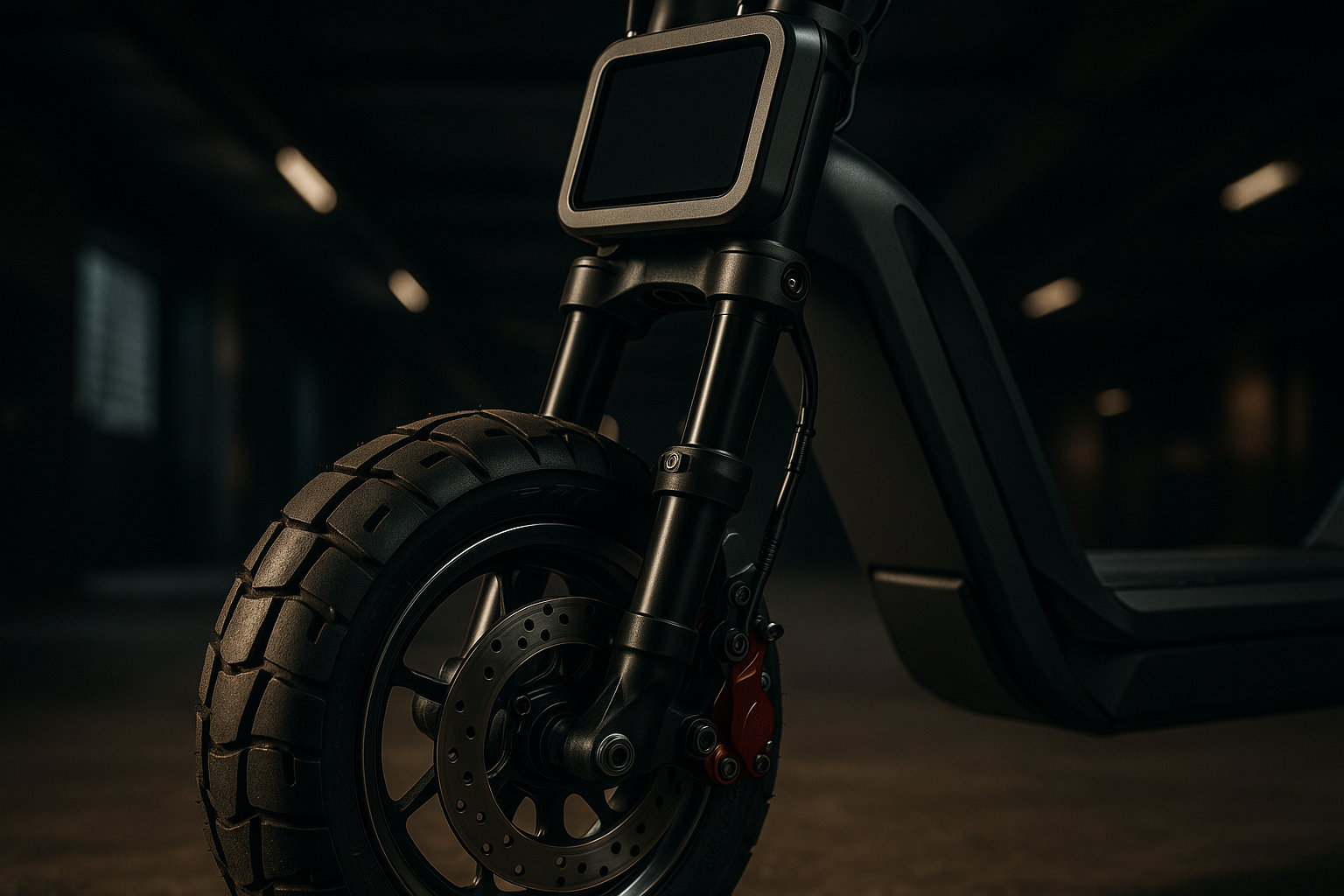
Other physical specs noted: 11″ PMT tires, KKE adjustable suspension, four-piston hydraulic brakes, and a large TFT display with the new Road Glow lighting system (video 0:20–0:45).
The creator (Ramier of Electric Scooter Guide) mentions price as “$28.99” in the clip — obviously a transcription/formatting slip; the intended figure is around $2,899 (video 0:40–0:55). The video teases lab testing to verify those specs; you can watch the original hands-on here: RoadRunner RS6 Ultra preview. For general context on electric scooters, see Electric scooter — Wikipedia.
Actionable: how to verify specs before buying
- Request serial and model numbers from the seller and validate against the manufacturer’s website.
- Ask for battery details: voltage (V), cell count, cell chemistry (NMC/LFP), and total capacity in Wh and Ah.
- Request independent test results (0–30 times, top speed runs, and range tests). If unavailable, insist on a demo ride or return policy.
RoadRunner RS6 Ultra First Ride Impressions
The creator explains initial ride feel: the RS6 Ultra feels smooth with a strong throttle response even under 50% battery, and Ramier reports no immediate speed wobble during cautious runs (video 0:50–2:30).
Specific sensations detailed in the video include throttle linearity (good low-end modulation), a punch in mode with dual motor engaged, and a more compliant suspension feel than the RX7. The creator used both mode and mode briefly and mentions being able to hold steady speeds at low throttle inputs — useful for commuting and stop-start urban rides (video 1:00–3:30).
Recorded observations to repeat in the full review (so you can reproduce them):
- Ride each mode (Mode 1, Mode 2, Mode 3) with dual and single motor toggled. Record speed at fixed throttle percentages and plot throttle-to-speed curves.
- Measure throttle deadband and linearity: tap from 0–25% throttle and log speed and motor current at 0%, 25%, 50%, 75%, 100% battery.
- Low-speed handling: perform figure-8s and slow uphill crawls with and without a steering damper to note wobble onset.
These steps mirror the creator’s suggestions and will surface whether the RS6 Ultra’s “nice” throttle response (video 1:00–3:00) holds up under instrumented testing.

RoadRunner RS6 Ultra: Performance — Speed, Acceleration, Hill Climb Tests
The creator reports noticeable punch, especially in mode with both motors active, and promises lab speed tests in the full review (video 1:30–2:40). Key manufacturer claims to verify: 60 mph top speed and 80-mile range (video 0:20–0:45).
Hill-climb demo notes from the hands-on: the RS6 Ultra handled a steep local hill comfortably at under 50% charge, with low motor noise and controllable throttle. The creator emphasized rider weight — he identifies himself as a heavier rider— and still experienced no overheating or power loss on that hill (video 3:00–3:40).
Actionable testing protocol to follow
- Acceleration runs: timed 0–30 mph and 0–40 mph runs using GPS (e.g., a phone app with Hz or better sampling). Repeat times and average.
- Top speed runs: over km flat, GPS-verified, repeated in both single- and dual-motor modes at 100% and 50% charge.
- Hill climbs: graded tests at known slopes (5%, 10%, 15%) with a standardized rider weight (e.g., kg / lb and kg / lb). Record speed, voltage sag, and motor/controller temperatures.
- Battery state dependency: repeat all tests at 100%, 75%, and 50% charge; log voltages and temperatures after each run.
Record these measurable metrics during each test: top speed (GPS verified), 0–30/0–40 time (seconds), braking distance (20/30 mph), Wh/mi, battery voltage sag under load, and motor/controller temps. These are the same metrics the creator promises to report in the August ESG review (video 2:00–4:00).
RoadRunner RS6 Ultra: Components & Technical Comparison
Core components shown in the video include dual 1500W hub motors, a claimed 60 V battery pack, KKE adjustable suspension, four-piston hydraulic brakes, 11″ PMT tires, and a large TFT display with Road Glow lighting (video 0:20–0:45, 4:00–4:15).
Specific facts from the hands-on: motors are listed as W each (peak/continuity to be verified), the TFT appears marginally larger than the RX7’s, and the suspension tune feels softer than the RX7 but more planted than the RS5 Max (video 0:25–0:45, 4:00–4:30).
RS6 Ultra vs RS5 Max vs RX7 — quick comparison
| Attribute | RS6 Ultra | RS5 Max | RX7 |
| Motors | Dual 1500W (claimed) | Single/Dual higher-torque variants | Dual mid-high torque |
| Battery Voltage | 60 V (claimed) | Often 52–60 V | 52 V common |
| Suspension | KKE adjustable (softer) | Stiffer setup | Slightly firmer |
| TFT / Lighting | Large TFT + Road Glow | Smaller TFT | Mid-size TFT |
Actionable tech checklist for buyers
- Ask for continuous and peak motor wattage (not just nominal).
- Request battery chemistry, Ah and Wh ratings, and cell count.
- Confirm controller model and firmware version.
- Ask for brake rotor diameter and pad specs for maintenance planning.
Safety, Maintenance, Tires & Legal Considerations for the RoadRunner RS6 Ultra
The creator notes no immediate wobble on the first ride but explicitly did not install the steering damper yet — a cautious choice while testing powerful scooters (video 1:50–2:20). You should install and test a steering damper before pushing top speed; this reduces steering oscillations and is standard practice on high-power scooters.
Maintenance recommendations (actionable)
- Check and torque handlebars, stem bolts, and folding latch to manufacturer torque specs weekly for the first miles, then monthly.
- Bedding-in brakes: do 8–12 progressive brake stops from 10–20 mph to seat pads and rotors; re-torque caliper bolts after first miles.
- Suspension: inspect seals and linkage every miles; lubricate pivot points when recommended.
Tire types and care — the RS6 Ultra uses 11″ PMT tires. PMT (polyurethane-molded or poly-foam molded tires) are low-maintenance and puncture-resistant compared to pneumatic tires. Data points: PMTs typically reduce puncture risk by >90% but transmit more vibration than air tires; you should still inspect for de-lamination every 250–500 miles.
Legal and regulatory overview (expanded)
- U.S.: local laws vary — many cities limit scooter speeds to 15–20 mph on sidewalks/paths; some states regulate helmet use and registration.
- EU: typical e-scooter rules cap top speeds (often 20–25 km/h) for public use; vehicles above local speed limits may be classified differently and require registration/insurance.
- Australia: state-based rules; some allow scooters only on private property or require vehicle registration at higher speeds.
Always check your local transport authority for up-to-date regulations. The creator’s advice — “ride safe” (video 4:25) — is a reminder: wear a certified helmet, add lights, and understand where you’re legally allowed to ride.
Battery Technology, Range Reality & Long-Term Cost Analysis for the RoadRunner RS6 Ultra
The creator repeats RoadRunner’s 80-mile range claim and promises to test real-world range across city, mixed, and high-speed scenarios (video 0:20–0:45, 4:00–4:30). In practice, range depends heavily on chemistry, rider weight, terrain, and speed. Expect Wh/mi reporting (watt-hours per mile) in the full test so readers can model their commute.
Battery chemistry primer
- NMC (nickel manganese cobalt): higher energy density, lighter pack, but faster calendar and cycle degradation; commonly used where weight and range are prioritized.
- LFP (lithium iron phosphate): lower energy density but better cycle life (often 2–3x cycles), improved thermal stability and safety.
- Hybrid blends: manufacturers sometimes use mixed cell strategies; ask for the exact cell type and manufacturer.
Actionable steps to estimate battery life and replacement costs:
- Request battery capacity in Wh (e.g., a V Ah pack = 1,200 Wh). Divide Wh by average Wh/mi to estimate range. If the creator reports Wh/mi in city, a 1,200 Wh pack gives ~60 miles.
- Estimate replacement cost: many packs cost 20–50% of MSRP depending on chemistry and capacity. For a $2,899 scooter, budget $600–$1,400 for a replacement pack in 3–5 years depending on use.
- Project life: NMC may last 500–1,000 cycles to 80% capacity; LFP commonly reaches 2,000+ cycles. Multiply cycles by average daily miles to estimate years of useful life.
Ownership vs scooter-sharing — example math: assume purchase price $2,899, average charge cost $0.05, 30-mile/week commute (1,560 miles/year). If Wh/mi = 20, energy used/year = 31,200 Wh = 31.2 kWh. Electricity cost/year ~ $3–$6 depending on local rates. Add maintenance ($150–$300/yr) and possible battery replacement amortized ($300/yr). Total annual cost ~ $453–$609 vs scooter-sharing daily fees (e.g., $1 unlock + $0.25/min). A 20-minute commute per day at $0.25/min + unlock (~$6/day) quickly exceeds ownership for regular commuters. This article includes a worksheet so you can slot your own commute numbers and see the break-even point over 3–5 years.
Who Should Buy the RoadRunner RS6 Ultra? Buying Guide & Editor's Choice Considerations
Based on the creator’s impressions and the quoted price (~$2,899), the RoadRunner RS6 Ultra targets riders who want high performance with practical commuting capability (video 0:40–0:55, 4:00–4:30). The creator asks viewers what comparisons they want — use that input to tailor your choice between similar scooters.
Buyer profiles
- Daily commuter: If your commute is 5–25 miles round trip and you need comfort (suspension + PMT tires), the RS6 Ultra could be a good fit — but confirm real-world Wh/mi first.
- Weekend speed enthusiast: If you want speed and torque (60 mph claim), wait for the full lab tests before buying and ensure steering damper and safety gear are installed.
- Fleet/operator: Consider weight, parts availability, and maintenance intervals — the RS6 Ultra’s components look robust but operators must verify spare-part supply and waterproofing.
Editor’s Choice criteria for 2026
- Performance-to-price ratio (measured GPS top speed and acceleration vs MSRP).
- Range reliability (real-world Wh/mi across conditions).
- Maintenance cost and aftermarket support (availability of parts, community mods).
- Safety features (brakes, steering damper compatibility, lighting).
At present, the creator says the RS6 Ultra is a promising candidate but final Editor’s Choice status will depend on lab outcomes in August 2026. The video suggests it combines the best of RS5 Max and RX7, but the claim will be validated through formal testing (video 4:00–4:30).
Accessories, Modifications & Recommended Add-ons for the RoadRunner RS6 Ultra
The video shows or implies a few accessories: the steering damper (not yet installed on the preview unit), larger TFT-compatible mounts, and night-riding gear to take advantage of Road Glow lighting (video 1:20, 4:05).
Recommended safety add-ons
- High-quality helmet (full-face for top-speed runs), reflective jacket, and gloves.
- Aftermarket grips and brake lever guards for better control.
- Phone mount compatible with the larger TFT and a handlebar bag for tools and spare fuses.
Actionable mod guide (step-by-step)
- Installing a steering damper: locate the lower fork mounting point and handlebar clamp; use thread locker on bolts, torque to manufacturer spec (commonly 8–12 Nm on clamp bolts; verify your scooter manual), and test at low speed before full runs.
- Mounting an external voltmeter/OBD-style monitor: run sensor leads to a visible mount near the TFT, secure with zip-ties, and confirm the reading against the scooter’s display at idle and under load.
- PMT tire maintenance: inspect for cuts/delamination every 250–500 miles; clean with mild detergent; PMTs rarely need inflation but do replace at first sign of structural breakdown.
Compatibility note: RS6 Ultra accessories may differ from RS5/RX7 — check bolt patterns, stem diameters, and cable routing before buying parts. The creator’s hands-on suggests some parts may be interchangeable, but always confirm measurements first (video 0:30–0:45).
FAQ: RoadRunner RS6 Ultra — People Also Ask
Q: How fast is the RoadRunner RS6 Ultra in real life? — The manufacturer claims mph; the creator emphasizes that independent speed tests will be performed in the full review (video 0:20–0:45). Real-world top speed depends on rider weight and charge level.
Q: What is the real-world range? — RoadRunner claims miles; Electric Scooter Guide will test city, mixed, and high-speed scenarios to establish Wh/mi and realistic ranges in August (video 0:20–0:45).
Q: Is it street-legal? — That depends on local regulations. Many regions cap scooter speeds for public paths; check local transport authority sites and consider registration/insurance if you plan to ride on roads.
Q: What maintenance does it need? — Regular torque checks, brake bedding, suspension inspection every miles, and PMT visual checks every 250–500 miles. The video walks through basic checks and recommends a steering damper before high-speed runs (video 1:50–2:20).
Q: Where can I buy it? — The video suggests checking authorized RoadRunner dealers and the official RoadRunner sales channels; always confirm warranty and return policy and ask for independent test data before purchase (video 0:40–0:55).
Planned Full Review: Test Protocols, Metrics & Timeline for the RoadRunner RS6 Ultra
The creator commits to a full ESG-style review in August (video 0:00–0:20, 4:25). That review will include speed tests, 0–30/0–40 acceleration, braking distance with four-piston calipers, graded hill climbs, and multi-condition range testing (video 0:40–0:55, 4:00–4:30).
Specific measurable metrics to be reported
- GPS-verified top speed and 0–30/0–40 times (seconds).
- Braking distances from and mph (feet/meters).
- Wh/mi in city and mixed conditions, with repeat runs at 100%, 75%, and 50% charge.
- Battery voltage sag under load and component temperatures (motor/controller)
How to reproduce each test
- Use calibrated GPS logging (1 Hz or better). Run each test three times and average results.
- For braking, mark start and stop points and film with a high-frame-rate camera for precise frame-by-frame measurement.
- Monitor battery voltage with an inline meter and log cell temperatures where possible using an IR sensor or thermocouples.
Subscribe and comment on the original video to influence the deep-dive and request specific comparisons — here: RoadRunner RS6 Ultra preview. The creator states the full review will arrive in August and encourages viewer questions to shape testing (video 4:25).
Additional Context: Micromobility Trends, Brands & Environmental Impact
Where does the RoadRunner RS6 Ultra sit in micromobility? It’s a performance-focused private ownership scooter targeted at commuters and enthusiasts, positioned differently than shared scooters by Lime or Bird and entry-level models from Razor. The creator compares it to the RS5 Max and RX7 and frames it as combining their strengths (video 0:25–0:45).
Environmental impact — brief lifecycle comparison
- Manufacturing emissions for a mid-range electric scooter are concentrated in battery production; extending battery life is the biggest lever to reduce lifecycle impact.
- Replacing car trips with scooter trips can reduce per-trip emissions substantially — multiple studies show e-scooter trips cut CO2 compared to short car trips, but results depend on electricity mix and scooter longevity.
Action list to lower your carbon footprint
- Prefer models with LFP or long-life cells if longevity matters.
- Buy used or refurbished when possible and repair rather than replace components.
- Recycle batteries through local hazardous-waste or manufacturer programs.
Fleet operator checklist: evaluate the RS6 Ultra for sharing by assessing weight, waterproofing (IP rating), ease of maintenance (quick-change parts), and how easy it is to source replacement parts. The video preview doesn’t deeply cover these points, so operators should request detailed service manuals and spare-part lists before committing.
Conclusion — Key Takeaways & What You Should Do Next
Summary takeaways: The RoadRunner RS6 Ultra shows real promise: dual 1500W motors, V architecture, 11″ PMT tires, KKE suspension, and four-piston brakes make it a serious contender in the upper-tier scooter market. The creator (Ramier, Electric Scooter Guide) praises throttle response and ride quality on first rides and promises full lab results in August (video 0:20–0:45, 4:00–4:30).
What you should do next
- If you’re considering buying: ask for verified motor continuous/peak output, battery Wh/Ah and chemistry, controller model, and independent test results (speed and range).
- Schedule a demo ride and perform the checklist: test each mode, try hill climbs, evaluate low-speed handling, and ask to see the steering damper installed before fast runs.
- Follow the full ESG review in August and subscribe to the original video: RoadRunner RS6 Ultra preview. Comment on the video to request particular tests — the creator explicitly asks for viewer input to shape the full review (video 0:00–0:20).
As the creator explains, first impressions are promising but not definitive — wait for the full, instrumented tests before making a final purchase decision. Ride safe, verify specs, and use the test protocols outlined here if you get a chance to evaluate one yourself.

Frequently Asked Questions
How fast is the RoadRunner RS6 Ultra in real life?
The creator repeats RoadRunner’s claim of a mph top speed (video 0:20–0:45). That number is a manufacturer claim — independent GPS-verified runs will be done in the full lab review scheduled for August 2026. Expect real-world top speed to vary with rider weight, wind, and charge level; independent testers often see 5–15% lower top speeds than manufacturer claims on high-performance scooters.
What is the real-world range of the RoadRunner RS6 Ultra?
RoadRunner claims an 80-mile range for the RS6 Ultra (video 0:20–0:45). The video shows short rides under 50% charge that still felt punchy, but the creator (Ramier, Electric Scooter Guide) warns full range testing is pending and will report Wh/mi in the August review. Plan to test city, mixed, and aggressive-highway scenarios to get realistic numbers; many scooters’ real-world range is 50–75% of the manufacturer’s idealized number depending on conditions.
Is the RS6 Ultra street-legal?
Street legality depends on where you live. Some U.S. states and EU countries restrict scooters by top speed or motor power; others treat them like bicycles. The creator reminds viewers to “ride safe” (video 4:25). Before buying, check your local DMV or transport authority website, and ask your insurer about coverage if you plan to ride on roads.
What components and maintenance should I check before buying?
The RS6 Ultra ships with 11″ PMT tires (polyurethane molded tires), KKE adjustable suspension, and four-piston hydraulic brakes according to the hands-on (video 0:20–0:45). The creator recommends checking torque on folding latches, bedding in the brakes, and testing steering dampers. If you buy one, verify the controller model, battery cell count, and request independent test results for continuous motor wattage.
How much does it cost to own an RS6 Ultra long-term?
Compare cost of ownership by adding purchase price (~$2,899 noted in the video), electricity (~$0.02–$0.05 per charge depending on battery size), routine maintenance (brake pads, tires, suspension), and a mid-life battery replacement (battery pack costs often 20–50% of the original scooter price). The article includes a sample 3–5 year ownership worksheet to compute break-even versus scooter-sharing services like Lime, Bird, or Razor.
Key Takeaways
- RoadRunner RS6 Ultra claims: dual 1500W motors, V architecture, mph top speed, 80-mile range; independent lab tests are pending (August 2026).
- Short rides show strong throttle response, stable handling, and comfortable KKE suspension; steering damper recommended before top-speed runs.
- Buyers should verify battery chemistry/Wh, motor continuous/peak watts, controller model, and request independent speed/range tests.
- Compare long-term ownership costs (purchase + maintenance + battery replacement) against scooter-sharing services using Wh/mi; ownership often wins for daily commuters over >2 years.
- Safety first: helmet, steering damper, brake bedding, and local law compliance — legal rules vary widely across the U.S., EU, and Australia.
