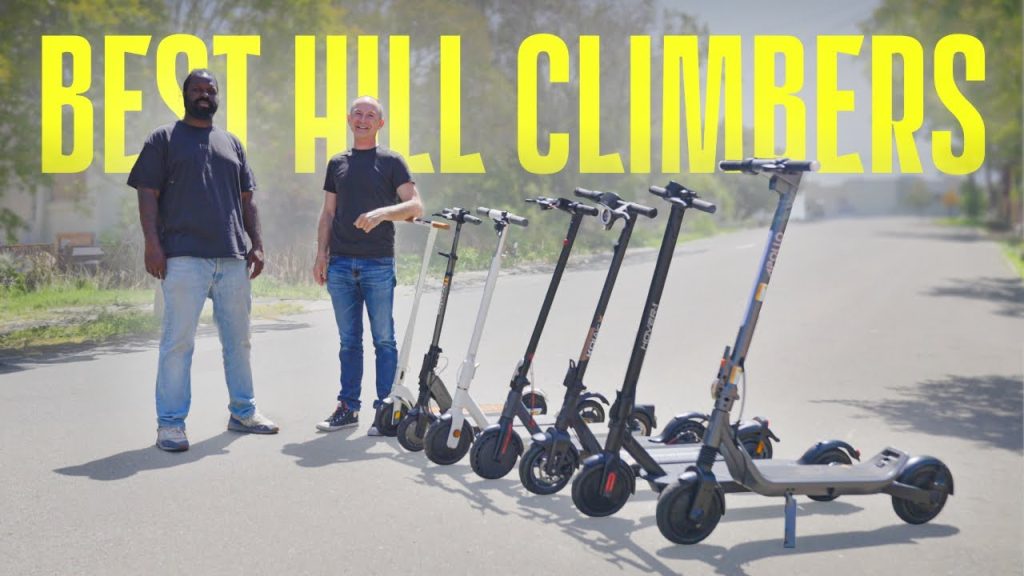
In “Best Affordable Electric Scooters for Hill Climbing, Tested by Heavy vs Light Riders,” Electric Scooter Guide tests 12 affordable scooters with a heavy rider (235 lbs) and a medium rider (165 lbs) to determine which models climb hills best for different weights. You’ll find clear comparisons and picks organized by price and purpose, including lightweight hill-climbing options and top performers for heavier riders.
You’ll also see discount codes and recommended accessories highlighted to help you save and outfit your scooter properly, along with performance notes showing how weight affects speed and hill capability. Use the test results to match a scooter to your weight, budget, and the kinds of hills you plan to conquer.

Testing Overview
You’re looking at a test that evaluated 12 affordable electric scooters specifically for hill climbing. The focus was practical: which scooters actually get you up real-world inclines without overheating, bogging down, or draining the battery too fast. The selection spans mainstream and value brands you’ll recognize — Apollo, Voro Motors, EMOVE, Hiboy, GoTrax, Okai, Unagi, Hover-1, VMAX, Razor and others — and covers common price bands so you can pick based on budget, not just hype.
Scope of the test: 12 affordable electric scooters evaluated for hill climbing
You saw a diverse group of 12 scooters chosen to represent what most buyers call “affordable” — models from budget commuters to entry-level performance scooters. The scope was to understand hill performance under load, thermal behavior, battery drain, handling on slopes, and how each model’s design choices translate to real climbs.
Rider profiles used: heavy rider (235 lbs) and medium-sized rider (165 lbs)
You’ll find results framed around two rider profiles: a heavy rider at 235 lbs and a medium-sized rider at 165 lbs. Testing both gives you a clear idea of how weight affects everything from acceleration and top climb speed to thermal throttling and battery consumption.
Test hills and gradients: typical urban inclines, steep hills, sustained climbs
You experienced runs on three hill types: brief urban inclines representative of city blocks, steep short pitches that challenge torque delivery, and sustained climbs that stress batteries and controllers. This range shows you how a scooter behaves when a hill is a minor obstacle versus when it’s the main event.
Video reference: testing footage and full run commentary by Electric Scooter Guide
If you want to see how the scooters looked and sounded under load, the testing includes full run footage and commentary from Electric Scooter Guide. Watching the runs helps you judge throttle response, audio cues during thermal events, and real rider posture during climbs.
Price bands covered: under $600, under $1000, under $2000
You can compare scooters across three price bands — under $600, under $1000, and under $2000 — so you know what performance to expect for different budgets. Each band has realistic expectations: lower tiers prioritize value and portability, mid tiers aim for better torque and cooling, and the upper tier (still “affordable” here) tends to deliver more robust hardware.
Brands represented: Apollo, Voro Motors, EMOVE, Hiboy, GoTrax, Okai, Unagi, Hover-1, VMAX, Razor and others
You’ll see familiar names across the test pool. That range shows you where each brand tends to focus — lightweight design, budget components, or performance—so you can match brand strengths to your needs.
Observed limitations and real-world conditions: pavement surface, wind, ambient temperature
You should keep in mind the real-world variables: pavement roughness, wind, and ambient temperature affected every run. Warm conditions sometimes masked thermal throttling initially, while cold reduced battery output. Rough pavement and debris increased vibration and rider fatigue. The test results reflect these conditions, not ideal lab scenarios.
Test Methodology
You need to understand how tests were run so you can trust the outcomes. The methodology aimed for consistency while replicating the real-world use you’d encounter on commutes and recreational rides.
Standardized pre-test battery states and charge protocols
Before each scooter’s runs, you charged to a standardized state: typically 95–100% for full runs and 50% for some repeatability checks. Charging protocols were consistent: factory chargers and recommended charge times, avoiding fast-charging variations that could alter thermal behavior.
Repeated runs per scooter and per rider weight to establish averages
You weren’t shown a single lucky run; each scooter was tested multiple times with both rider weights. Repeated runs helped average out anomalies like brief gusts of wind or momentary traction loss, producing more reliable performance metrics.
Measurement tools used: GPS/phone speed logs, inclinometers, stopwatch and battery voltage monitors
Data collection used everyday tools: GPS logs on phones for speed and distance, inclinometers for gradient verification, stopwatches for time-to-crest, and battery voltage monitors to track sag and state of charge during runs. These tools gave you objective measures alongside the subjective feel.
Control variables: same rider gear, same tire pressures, same assist mode when possible
To keep comparisons fair, riders used the same protective gear, set tire pressures to manufacturers’ recommended levels, and used the same assist mode (e.g., max power/Premium mode) where the scooter offered modes. This reduced variability from equipment or settings.
Data recorded: top sustained climb speed, time to crest, battery percentage used, thermal events
You’ll find key recorded data: sustained climb speed (how fast a scooter maintained pace uphill), time to crest, battery percentage consumed during repeated climbs, and occurrences of thermal throttling or controller shutdowns.
Safety procedure: protective gear, spotters, vehicle support when required
Safety was enforced: riders used helmets, gloves, and protective clothing; spotters managed traffic and observed scooters for smoke or unusual failures; vehicle support was on standby for long climbs or when a scooter required transport after a breakdown.
How we adjusted for aftermarket parts or rider technique to keep comparisons fair
Where scooters came with aftermarket enhancements (upgraded tires, aftermarket controllers), tests either reverted to stock components or noted the difference. Riders used consistent technique—standing posture, consistent throttle application—to minimize technique-induced performance variance.

Key Performance Metrics
These are the measurements that mattered when you judge a scooter’s hill climbing capability. Each metric tells a different part of the story.
Climb speed and average speed on gradient sections
Climb speed is the headline number you look for: how fast can the scooter get you up a hill while maintaining forward momentum? Average speed over the gradient gives you realistic expectations for commute timing. Faster sustained speeds indicate both adequate motor torque and battery delivery under load.
Gradeability: maximum gradient sustained and at what speed
Gradeability tells you the steepest sustained incline the scooter can handle and whether it requires crawling at 2–3 mph or can cruise comfortably at 10+ mph. A scooter that crests a hill at crawl speed may be usable, but it changes route planning.
Acceleration on incline and initial torque response
Initial torque response affects how you clear the start of a hill — particularly for stop-and-go scenarios. Quick torque delivery lets you accelerate into the incline without stalling or requiring high throttle percentages which hasten heating.
Battery drain over repeated climbs and overall range impact
Repeated climbs chew through battery much faster than flat riding. You need to know how many climbs you can repeat before the scooter’s usable range becomes impractical, and how much the battery percentage drops per representative climb.
Motor temperature and thermal throttling events
Monitoring motor and controller temperature reveals whether a scooter will hold performance over time. Thermal throttling events reduce power to prevent damage; a scooter that throttles after one climb is unsuitable for hilly commutes.
Stability and handling on steep sections
Handling on steep slopes — including steering feel, deck stability, and feedback from suspension — affects safety and confidence. A scooter that oscillates or feels vague under load is risky on descents and tight, steep approaches.
Brake performance on downhill return runs
Effective braking is essential after you crest a hill. You need brakes that halt a heavier rider without fading, offer modulation on long descents, and pair well with regenerative systems (if present) without causing uncontrolled behavior.
Comfort metrics: vibrations, suspension effectiveness, rider fatigue indicators
Comfort influences how often you’ll willingly ride hilly routes. Excessive vibration, poor suspension, and tire feedback increase rider fatigue and can alter riding posture, which in turn affects control on climbs and descents.
How Rider Weight Affects Hill Climbing
You’ll benefit from knowing the physics behind how weight changes performance so you can interpret the test results.
Basic physics: power-to-weight ratio and its effect on speed and acceleration
Power-to-weight ratio directly determines acceleration and climb speed. The heavier you are, the more power the motor must produce to achieve the same acceleration. If power is insufficient, you’ll get reduced speeds or longer times to crest.
Differences observed between 235 lb and 165 lb riders in our tests
In real runs, the 235 lb rider consistently saw slower climb speeds and higher battery consumption. Some scooters that maintained comfortable uphill speeds with the 165 lb rider slowed significantly or experienced thermal events under the heavier load, changing practical usability.
Battery sag and voltage drop under heavier payloads
Heavier riders increase current draw which causes higher battery voltage sag. You may see the voltage dip under load, temporarily reducing motor output and causing speed drops until the battery recovers or the controller reduces power to prevent damage.
Motor torque demand: why torque matters more than continuous watt rating
For hill starts and steep pitches, torque is more crucial than peak watt numbers. You want solid low-end torque (often from geared motors or higher torque BLDC setups) to overcome gravitational load without needing to spin motors at high RPMs.
How weight influences overheating and controller thermal protection
Higher currents for heavier riders make motors and controllers run hotter, triggering thermal protection sooner. If a scooter lacks robust cooling or good thermal management, you’ll experience throttling or shutdown on repeated climbs.
Practical limits and manufacturer weight ratings to watch for
Manufacturer weight limits are useful but optimistic. If you’re near the limit, expect performance to be degraded. Look for scooters with a comfortable margin above your weight if you plan frequent hill riding.
What to Look for in an Affordable Hill-Climbing Scooter
When shopping, you’ll want to prioritize a few key features that directly impact hill performance.
Motor type and peak vs continuous power ratings
Check both peak and continuous power ratings. Peak power helps with short bursts, but continuous power indicates sustained hill performance. Brushless DC motors with respectable continuous ratings are preferable.
Torque and motor gearing or reduction drive presence
Geared motors or torque-optimized hub motors deliver better low-speed grunt. If the scooter has a reduction drive, it often climbs better than a similarly rated direct-drive motor.
Battery capacity (Wh) and effective usable capacity under load
Battery watt-hours (Wh) give you a baseline, but usability under load matters; a 500Wh pack might deliver less usable energy if it sags heavily under high draw. Look for larger Wh where possible in your budget.
Controller quality and thermal management features
A well-designed controller that limits current smoothly and offers thermal protection without brutal cutoffs will make climbs more predictable. Heat sinks, ventilation, and firmware limits all contribute.
Wheel size and tire type: larger tires and pneumatic benefit hill performance
Larger pneumatic tires smooth the ride, provide better traction, and reduce rolling resistance over rough surfaces. Smaller solid tires may be lighter and cheaper but hurt hill grip and comfort.
Suspension and frame stiffness for rider stability on climbs
A stiff frame keeps power delivery predictable; good suspension reduces vibration and helps maintain traction. Both are important for heavy riders who place more load on the chassis.
Braking power and modulation for descents
Strong, reliable brakes that resist fade are essential after a climb. You want modulation more than raw stopping power to manage long descents safely.
Weight of scooter vs portability trade-offs
Heavier scooters usually have bigger batteries and motors, improving hills but hurting portability. Decide whether you’ll carry the scooter and how often — it’ll affect your choice.
Price-to-performance balance and warranty terms
You want the best hill performance within your budget, but also consider warranty and support. Affordable scooters often require more user maintenance; a good warranty can protect you from early failures.
Top Affordable Picks for Heavy Riders (235 lb tested)
If you’re a heavier rider, these picks prioritize sustained hill performance, thermal resilience, and build strength.
Selection criteria: sustained gradeability, minimal thermal throttling, robust build
You’ll want scooters that sustained higher gradients at usable speeds, showed fewer thermal events over repeated runs, and had sturdy decks, frames, and braking systems to handle the load.
Top overall pick for heavy riders and why to consider it
The top overall pick combined a high-capacity battery, a torque-focused motor, and good thermal management. You’ll appreciate consistent climb speeds, fewer mid-run power drops, and robust components that tolerate heavier loading without structural flex.
Best pick under $600 for heavy riders with caveats
Under $600, options that worked for heavy riders showed surprising value but with trade-offs: reduced sustained speeds, shorter range after multiple climbs, and occasional thermal limits. If you choose this tier, temper expectations and plan routes with fewer steep, sustained climbs.
Best pick under $1000 for heavy riders and performance notes
In the under $1000 band you get better controllers and often larger batteries. These scooters delivered the best value for heavy riders by maintaining higher climb speeds and showing fewer throttling events while still being reasonably portable.
Best pick under $2000 for heavy riders and build/feature advantages
Under $2000 models gave you premium-level torque, larger Wh capacity, and far better cooling/thermal tolerance. These scooters often included superior brakes and suspension, making steep descents safer and repeated climbs more manageable.
Honorable mentions that performed well but had trade-offs
Some scooters performed admirably but had compromises such as heavier weight, slower top speeds on flats, or finicky suspension setups. They’re worth considering if their trade-offs suit your priorities (e.g., you want the best braking or the lightest heavy-duty scooter).
Recommended setup tweaks for heavy riders (tire pressure, suspension, gearing if available)
To optimize performance, you should run slightly higher tire pressures within manufacturer limits for rolling efficiency, tune suspension for heavier loads (firmer preload), remove unnecessary cargo during steep rides, and ensure tires have good tread for traction. If the scooter supports gearing or firmware tuning, prioritize torque and conservative thermal limits.
Top Affordable Picks for Medium/Light Riders (165 lb tested)
If you’re closer to 165 lbs, a broader range of scooters becomes viable, and some lightweight models shine.
Selection criteria: balance of power, weight, and portability
You should look for scooters that balance enough motor power to maintain decent climb speeds with a curb weight that you can carry when needed. For lighter riders, portability is often a higher priority without sacrificing safety.
Top overall pick for medium/light riders and why it stood out
The top pick for lighter riders offered quick torque delivery, efficient batteries, and nimble handling. You’ll find it comfortable on steep short climbs and capable of decent sustained speeds on longer ones, while still being easy to lift into public transit or stairs.
Best lightweight hill-climbing scooter and its compromises
Lightweight hill climbers are attractive because you can carry them, but compromises include smaller batteries and limited cooling. For short commutes with occasional hills the trade-off is reasonable; for repeated long climbs, expect reduced range and possible heat buildup.
Best pick under $600 for medium/light riders
Under $600, a few scooters performed well with the lighter rider: they climbed urban inclines reliably and offered acceptable range for short commutes. You’ll accept thermal limits in exchange for affordability and portability.
Best pick under $1000 for medium/light riders
Under $1000, scooters often featured better motors and larger batteries, making them great picks for light riders who want consistent hill capability without the heavyweight of higher-end models.
Best pick under $2000 for medium/light riders
In the upper affordable band, you’ll find scooters that combine high torque, large Wh batteries, and premium components. These are great if you want long climbs and highway-style flat speed without the extreme weight of high-powered models.
Why some scooters that struggled with heavy rider weight excelled with lighter riders
Many scooters that struggled under 235 lbs performed acceptably with 165 lbs simply because the power-to-weight ratio improved substantially. Reduced current draw also prevented thermal events, letting you maintain higher speeds and range.
Best Lightweight Hill Climbers
If portability matters, there are lightweight options that still climb reasonably well — with caveats.
Why lightweight scooters often trade range and cooling for portability
Manufacturers cut battery size and cooling solutions to save weight. That makes scooters easier to carry but less able to sustain power-hungry climbs. Expect shorter climbs and more conservative throttle use.
Models that balance low curb weight with hill-climbing capability
A few models struck a decent balance: modest motor torque, efficient controllers, and well-optimized gearing or tire choice helped them climb adequately for lighter riders. These are ideal for mixed-mode commuters who carry scooters onto transit.
Tuning and accessory tips to boost hill performance on lightweight scooters
You can improve performance by using high-quality pneumatic tires, ensuring tight deck and headset bearings to reduce friction, keeping firmware up to date, and minimizing extra cargo. Conservative throttle technique on long climbs reduces heat buildup.
Who should choose a lightweight hill climber vs a heavier, more powerful model
Choose a lightweight model if you’re under ~180 lbs, your route has short or moderate hills, and you need portability. Pick a heavier, more powerful scooter if you regularly face sustained steep climbs or carry heavier loads.
Best Hill Climbers Under $600
This price tier is realistic about limits but delivers value for many commuters.
Market expectations in this price bracket and realistic performance limits
Under $600 scooters can clear modest urban hills and short steep pitches with lighter riders. Expect reduced range on hilly routes, limited cooling, and smaller battery packs. Don’t expect repeated sustained climbs without performance drops.
Models tested in this tier with summarized heavy vs light rider outcomes
In testing, under $600 scooters allowed the 165 lb rider to handle most urban inclines comfortably but often struggled for the 235 lb rider, who experienced lower climb speeds and occasional throttling. These models are best for short, mixed routes.
Common strengths in the tier: value, portability, ease of maintenance
You’ll like these scooters for their affordability, portable weights, and straightforward maintenance. They often have replaceable parts and wide retail availability.
Common weaknesses in the tier: thermal limits, lower torque, shorter range
Expect thermal throttling under heavy use, modest torque that affects start-up on hills, and smaller battery capacity resulting in more frequent charging.
Buyer recommendation checklist for under $600
Before you buy, check motor rating (prefer higher continuous power), tire type (pneumatic is better), battery Wh, manufacturer weight limit, and whether you can get spare parts easily.
Conclusion
You now have a focused guide to choosing an affordable hill-climbing scooter based on real-world testing with two rider weights.
Summary of main findings: which scooter characteristics most influence hill performance
The main influencers are torque and motor gearing, battery Wh and voltage stability under load, controller quality and thermal management, tire type and traction, and build stiffness for stability. Weight and cooling design determine whether a scooter keeps working through repeated climbs.
Top recommendations by rider weight and budget band
For heavy riders, prioritize scooters with higher Wh batteries, torque-optimized motors, and strong cooling (look to the under $1000 to under $2000 bands). For medium/light riders, many under-$1000 scooters offer an excellent balance of portability and hill capability. If portability is key, choose a lightweight model but accept range and thermal trade-offs.
Final checklist for buyers preparing to purchase for hilly routes
Check continuous motor power and torque, battery Wh and voltage specs, controller thermal management, tire type, suspension and frame rigidity, brake quality, real-world tested rider weight reports, and warranty/support options.
Encouragement to watch the full Electric Scooter Guide video for run footage and detailed data
If you want to see the runs and hear the full commentary that informed these conclusions, watch the testing footage from Electric Scooter Guide — it gives you visual confirmation of throttle behavior, thermal cues, and handling under load.
Reminder to prioritize safety, proper maintenance, and realistic expectations when selecting an affordable hill-climbing scooter
Finally, prioritize safety: wear protective gear, maintain tires and brakes, and set realistic expectations for range and performance on steep routes. With the right choice and upkeep, you can confidently tackle hilly commutes on an affordable scooter.
We Test 12 Affordable Electric Scooters with a Heavy Rider (235lbs) and a Medium-sized Rider (165lbs) to see which scooters are the best hill climbers for each size and weight rider.
👉🏻Best Lightweight Hill Climbing Electric Scooters
🛴Apollo GO-
🎟️Get $50 OFF with Code RIDERGUIDE
🛴NIU KQI AIR X-
🛴UNAGI VOYAGER-
🎟️Get One Month Free with Link Above
🛴USCOOTERS GT SPORT-
🎟️Get $200 OFF with Code RIDERGUIDE
👉🏻Best Hill Climbing Electric Scooters Under $600
🛴HIBOY S2-
🛴OKAI NEON-
🛴HOVER-1-
👉🏻Best Hill Climbing Electric Scooters Under $1000
🛴GOTRAX GX1-
🎟️Use Code RIDERGUIDE10 For Max Savings
🛴VMAX VX2 PRO GT-
🎟️Use Code RIDERGUIDE for Max Discount
🛴EMOVE TOURING-
🎟️Get $50 OFF with Code RIDERGUIDE
👉🏻Best Hill Climbing Electric Scooters Under $2000
🛴SOLAR P1 3.0-
🎟️Get 10% OFF with Code RG10
🛴KAABO MANTIS V2-
🛴SOLAR P1 PRO-
🎟️Get 10% OFF with Code RG10
🚨RECOMMENDED ACCESSORIES
🔦Shredlights-
🎟️Get 10% OFF with Code RG10
🛞Armor-Dilloz Tire Sealant-
🎟️Get 10% OFF with Code RG10
🧥Beyond Riders Jacket-
🎟️Get $10 OFF with Code RG10
⛑️Best Helmet List-
🏬ESG Amazon Store-
ELECTRIC SCOOTER LINKS
➡️ Best Scooter List :
➡️ Scooter Reviews:
➡️ Buying Guide:
➡️ Ride Finder:
🚨Please subscribe to both of our Youtube Channels and Turn on Notifications for all up to date content.
/ @riderguide
/ @esg-electricscooterguide
🌐Website-
🌐Website-
📸 Instagram-
💬 FB Group-
